


• Chronic Refractory Cough Market Size, Trends, and Growth Analysis 2026-2033


    The chronic refractory cough market is witnessing robust momentum driven by rising prevalence of persistent cough conditions and advancements in therapeutic options. This evolving industry landscape aligns closely with shifting patient demands and regulatory support, underscoring significant opportunities for innovation and expansion among market companies.


    Market Size and Overview


    The chronic refractory cough market is estimated to be valued at USD 1.76 Bn in 2025 and is expected to reach USD 3.10 Bn by 2032, growing at a compound annual growth rate (CAGR) of 8.4% from 2025 to 2032..
    Chronic Refractory Cough Market Trends highlight growing awareness and diagnosis of chronic refractory cough, along with increasing investment in R&D for novel treatments. This market forecast reflects intensified efforts by pharmaceutical companies to address unmet clinical needs, influencing overall market dynamics and business growth.


    Core Market Segments


    The chronic refractory cough market is segmented primarily by product type, end user, and region. By product type, segments include neuromodulators, anti-tussives, and combination therapies, with neuromodulators dominating due to efficacy in resistant cases, and combination therapies exhibiting the fastest growth propelled by innovative drug formulations introduced in 2024 and 2025.
    End-user segments include hospitals, specialty clinics, and home care settings, where specialty clinics represent the dominant sub-segment owing to specialized treatment approaches, while home care is the fastest-growing segment driven by telehealth initiatives. Regionally, North America leads in market revenue, benefiting from high healthcare expenditure and advanced diagnostic infrastructure.


    Market Drivers


    A principal market driver is the increased regulatory approvals for novel chronic refractory cough therapies, supported by favorable healthcare policies to expedite access. For instance, in 2024, the U.S. FDA granted breakthrough therapy designation to a novel neuromodulator, stimulating market growth strategies and expanding treatment options.
    This regulatory encouragement, coupled with rising patient population and demand for personalized treatment plans, fuels robust market opportunities and enhances market revenue prospects globally.


    Segment Analysis: Product Type


    Focusing on product types, neuromodulators hold the largest market share due to their precise mechanism targeting the neurogenic basis of refractory cough. Their revenue soared by over 15% in 2025 as per recent sales data. Meanwhile, combination therapies are the fastest-growing sub-segment, benefiting from newly launched drugs by key market players, integrating anti-inflammatory agents with cough suppressants to improve efficacy.
    These developments underscore the dynamic nature of product innovation within chronic refractory cough market segments, as reflected in evolving market analysis.


    https://www.coherentmi.com/industry-reports/chronic-refractory-cough-market

    Chronic Refractory Cough Market Size, Trends, and Growth Analysis 2026-2033 The chronic refractory cough market is witnessing robust momentum driven by rising prevalence of persistent cough conditions and advancements in therapeutic options. This evolving industry landscape aligns closely with shifting patient demands and regulatory support, underscoring significant opportunities for innovation and expansion among market companies. Market Size and Overview The chronic refractory cough market is estimated to be valued at USD 1.76 Bn in 2025 and is expected to reach USD 3.10 Bn by 2032, growing at a compound annual growth rate (CAGR) of 8.4% from 2025 to 2032.. Chronic Refractory Cough Market Trends highlight growing awareness and diagnosis of chronic refractory cough, along with increasing investment in R&D for novel treatments. This market forecast reflects intensified efforts by pharmaceutical companies to address unmet clinical needs, influencing overall market dynamics and business growth. Core Market Segments The chronic refractory cough market is segmented primarily by product type, end user, and region. By product type, segments include neuromodulators, anti-tussives, and combination therapies, with neuromodulators dominating due to efficacy in resistant cases, and combination therapies exhibiting the fastest growth propelled by innovative drug formulations introduced in 2024 and 2025. End-user segments include hospitals, specialty clinics, and home care settings, where specialty clinics represent the dominant sub-segment owing to specialized treatment approaches, while home care is the fastest-growing segment driven by telehealth initiatives. Regionally, North America leads in market revenue, benefiting from high healthcare expenditure and advanced diagnostic infrastructure. Market Drivers A principal market driver is the increased regulatory approvals for novel chronic refractory cough therapies, supported by favorable healthcare policies to expedite access. For instance, in 2024, the U.S. FDA granted breakthrough therapy designation to a novel neuromodulator, stimulating market growth strategies and expanding treatment options. This regulatory encouragement, coupled with rising patient population and demand for personalized treatment plans, fuels robust market opportunities and enhances market revenue prospects globally. Segment Analysis: Product Type Focusing on product types, neuromodulators hold the largest market share due to their precise mechanism targeting the neurogenic basis of refractory cough. Their revenue soared by over 15% in 2025 as per recent sales data. Meanwhile, combination therapies are the fastest-growing sub-segment, benefiting from newly launched drugs by key market players, integrating anti-inflammatory agents with cough suppressants to improve efficacy. These developments underscore the dynamic nature of product innovation within chronic refractory cough market segments, as reflected in evolving market analysis. https://www.coherentmi.com/industry-reports/chronic-refractory-cough-market

    WWW.COHERENTMI.COM
    Chronic Refractory Cough Market Size YoY Growth Rate, 2032
    Chronic Refractory Cough Market valuation is estimated to reach USD 1.76 Bn in 2025 and is anticipated to grow to USD 3.10 Bn by with steady CAGR of 8.40%
    0 Reacties 0 aandelen 563 Views 0 voorbeeld
  • Global Narcolepsy Market: Size, Trends, and Strategic Growth Outlook
    The global narcolepsy market is witnessing dynamic transformations driven by advancements in treatment options and an increased focus on patient-centric therapies. Increasing awareness of narcolepsy as a chronic sleep disorder, coupled with evolving healthcare infrastructure, is fueling significant industry growth and innovation in recent years.


    Market Size and Overview


    The Narcolepsy Market is estimated to be valued at USD 2.77 Billion in 2025 and is expected to reach USD 5.23 Billion by 2032, growing at a compound annual growth rate (CAGR) of 9.5% from 2025 to 2032.
    This robust market growth can be attributed to rising disease prevalence, advances in drug formulations, and expansion of diagnostic capabilities worldwide.
    The Narcolepsy Market Report highlights a broad scope of treatment options ranging from pharmacological therapies to emerging biologics, reflecting increasing business growth opportunities in the sector.


    Market Segments


    Key market segments are categorized based on product type, end-user, and distribution channels. Under product type, sub-segments include stimulants, sodium oxybate, and antidepressants with sodium oxybate emerging as the fastest-growing sub-segment due to its effectiveness in managing cataplexy and excessive daytime sleepiness, as observed in 2024 clinical studies.
    The end-user segment bifurcates into hospitals, specialty clinics, and homecare settings, with specialty clinics showing dominant demand driven by personalized therapy approaches. In distribution, pharmacy retail and hospital pharmacies are pivotal, with pharmacy retail expanding rapidly owing to improved drug accessibility and patient-centric services.


    Market Drivers


    A major market driver in 2024 is the regulatory support for novel narcolepsy therapies that align with precision medicine trends. Policies incentivizing innovation and faster drug approvals have expedited the launch of next-generation medications, boosting market revenue. For instance, the rollout of newly approved formulations by key industry players resulted in an 8% increase in treatment adoption rates during 2024, highlighting the impact of policy frameworks on market dynamics and growth strategies.


    Segment Analysis


    Focusing on the product type segment, sodium oxybate leads revenue performance by addressing both key symptoms of narcolepsy effectively. Data from 2025 shows that this sub-segment recorded approximately USD 1 billion market revenue owing to clinical efficacy and expanded patient preference.
    Meanwhile, the stimulant sub-segment is the fastest-growing due to ongoing innovations that minimize side effects and improve patient compliance. Case studies from 2024 demonstrate that patients on newly developed stimulants experienced a 15% improvement in daytime alertness, emphasizing the expanding market scope for these therapeutics.


    https://www.coherentmi.com/industry-reports/narcolepsy-market
    Global Narcolepsy Market: Size, Trends, and Strategic Growth Outlook The global narcolepsy market is witnessing dynamic transformations driven by advancements in treatment options and an increased focus on patient-centric therapies. Increasing awareness of narcolepsy as a chronic sleep disorder, coupled with evolving healthcare infrastructure, is fueling significant industry growth and innovation in recent years. Market Size and Overview The Narcolepsy Market is estimated to be valued at USD 2.77 Billion in 2025 and is expected to reach USD 5.23 Billion by 2032, growing at a compound annual growth rate (CAGR) of 9.5% from 2025 to 2032. This robust market growth can be attributed to rising disease prevalence, advances in drug formulations, and expansion of diagnostic capabilities worldwide. The Narcolepsy Market Report highlights a broad scope of treatment options ranging from pharmacological therapies to emerging biologics, reflecting increasing business growth opportunities in the sector. Market Segments Key market segments are categorized based on product type, end-user, and distribution channels. Under product type, sub-segments include stimulants, sodium oxybate, and antidepressants with sodium oxybate emerging as the fastest-growing sub-segment due to its effectiveness in managing cataplexy and excessive daytime sleepiness, as observed in 2024 clinical studies. The end-user segment bifurcates into hospitals, specialty clinics, and homecare settings, with specialty clinics showing dominant demand driven by personalized therapy approaches. In distribution, pharmacy retail and hospital pharmacies are pivotal, with pharmacy retail expanding rapidly owing to improved drug accessibility and patient-centric services. Market Drivers A major market driver in 2024 is the regulatory support for novel narcolepsy therapies that align with precision medicine trends. Policies incentivizing innovation and faster drug approvals have expedited the launch of next-generation medications, boosting market revenue. For instance, the rollout of newly approved formulations by key industry players resulted in an 8% increase in treatment adoption rates during 2024, highlighting the impact of policy frameworks on market dynamics and growth strategies. Segment Analysis Focusing on the product type segment, sodium oxybate leads revenue performance by addressing both key symptoms of narcolepsy effectively. Data from 2025 shows that this sub-segment recorded approximately USD 1 billion market revenue owing to clinical efficacy and expanded patient preference. Meanwhile, the stimulant sub-segment is the fastest-growing due to ongoing innovations that minimize side effects and improve patient compliance. Case studies from 2024 demonstrate that patients on newly developed stimulants experienced a 15% improvement in daytime alertness, emphasizing the expanding market scope for these therapeutics. https://www.coherentmi.com/industry-reports/narcolepsy-market
    WWW.COHERENTMI.COM
    Narcolepsy Market Size, Trends YoY Growth Rate 2025-2032
    Narcolepsy Market holds a forecasted revenue of USD 2.77 Bn in 2025 and is likely to cross USD 5.23 Bn by 2032 with a steady annual growth rate of 9.50%
    0 Reacties 0 aandelen 570 Views 0 voorbeeld
  • Biologics Fill Finish Manufacturing Market Size, Trends, and Growth Strategies Analysis

    The biologics fill finish manufacturing industry is evolving rapidly, driven by increasing demand for biopharmaceuticals and complex drug formulations. The market's dynamic nature reflects advances in technology, stringent regulatory compliance, and rising investments in capacity expansion.

    Market Size and Overview

    The Biologics Fill Finish Manufacturing Market is estimated to be valued at USD 5.83 Billion in 2025 and is expected to reach USD 9.80 Billion by 2032, growing at a compound annual growth rate (CAGR) of 7.7% from 2025 to 2032.

    https://www.coherentmi.com/industry-reports/biologics-fill-finish-manufacturing-market
    Biologics Fill Finish Manufacturing Market Size, Trends, and Growth Strategies Analysis The biologics fill finish manufacturing industry is evolving rapidly, driven by increasing demand for biopharmaceuticals and complex drug formulations. The market's dynamic nature reflects advances in technology, stringent regulatory compliance, and rising investments in capacity expansion. Market Size and Overview The Biologics Fill Finish Manufacturing Market is estimated to be valued at USD 5.83 Billion in 2025 and is expected to reach USD 9.80 Billion by 2032, growing at a compound annual growth rate (CAGR) of 7.7% from 2025 to 2032. https://www.coherentmi.com/industry-reports/biologics-fill-finish-manufacturing-market
    0 Reacties 0 aandelen 634 Views 0 voorbeeld
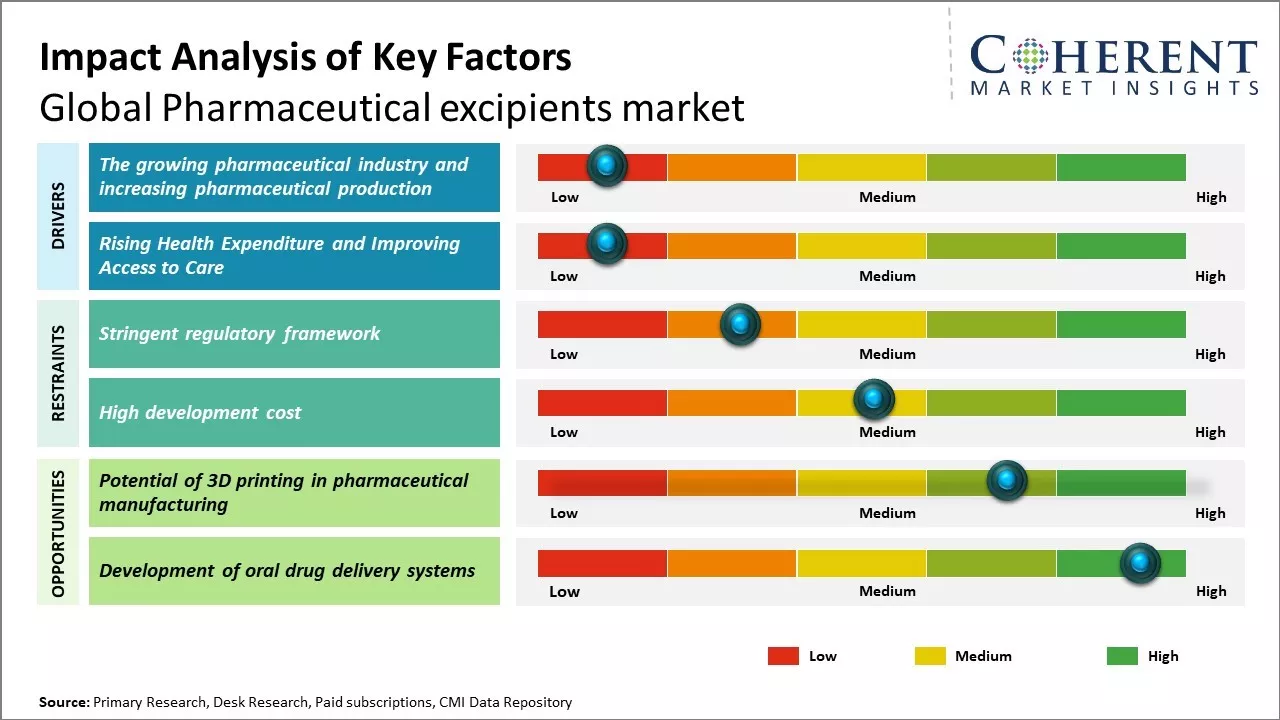
  • Pharmaceutical Excipients Market Size, Trends, and Growth Analysis 2026-2033


    The pharmaceutical excipients industry is witnessing robust expansion fueled by growing demand for enhanced drug formulations and rising innovation in drug delivery systems. The market’s trajectory reflects significant advancements in excipient functionalities to meet stringent regulatory standards and evolving pharmaceutical requirements. This blog analyzes recent market dynamics, key segments, consumer insights, and strategic maneuvers shaping the competitive landscape.


    Market Size and Overview


    Global pharmaceutical excipients market is estimated to be valued at USD 11.90 Bn in 2026 and is expected to reach USD 21.21 Bn by 2033, exhibiting a compound annual growth rate (CAGR) of 8.6% from 2026 to 2033.
    This market forecast is driven by the rising prevalence of chronic diseases, increased pharmaceutical production, and growing emphasis on excipient safety and functionality. Such market revenue growth underscores expanding business opportunities amid evolving market challenges and stringent regulatory frameworks.


    Read This Blog Our Web Site :
    https://www.coherentmarketinsights.com/market-insight/pharmaceutical-excipients-market-124


    #HealthcareMarket #PharmaceuticalResearch #PharmaTrends #DrugDelivery #HealthcareIndustry
    Pharmaceutical Excipients Market Size, Trends, and Growth Analysis 2026-2033 The pharmaceutical excipients industry is witnessing robust expansion fueled by growing demand for enhanced drug formulations and rising innovation in drug delivery systems. The market’s trajectory reflects significant advancements in excipient functionalities to meet stringent regulatory standards and evolving pharmaceutical requirements. This blog analyzes recent market dynamics, key segments, consumer insights, and strategic maneuvers shaping the competitive landscape. Market Size and Overview Global pharmaceutical excipients market is estimated to be valued at USD 11.90 Bn in 2026 and is expected to reach USD 21.21 Bn by 2033, exhibiting a compound annual growth rate (CAGR) of 8.6% from 2026 to 2033. This market forecast is driven by the rising prevalence of chronic diseases, increased pharmaceutical production, and growing emphasis on excipient safety and functionality. Such market revenue growth underscores expanding business opportunities amid evolving market challenges and stringent regulatory frameworks. Read This Blog Our Web Site : https://www.coherentmarketinsights.com/market-insight/pharmaceutical-excipients-market-124 #HealthcareMarket #PharmaceuticalResearch #PharmaTrends #DrugDelivery #HealthcareIndustry
    WWW.COHERENTMARKETINSIGHTS.COM
    Pharmaceutical Excipients Market Size & Forecast, 2026-2033
    Pharmaceutical Excipients Market valuation is estimated to USD 11.90 Bn in 2026 and is anticipated to grow to USD 21.21 Bn by 2033 with steady CAGR of 8.6% .
    0 Reacties 0 aandelen 995 Views 0 voorbeeld
  • Biologics Fill Finish Manufacturing Market: Size, Trends, and Strategic Insights 2026–2033

    The biologics fill finish manufacturing industry is undergoing rapid transformation fueled by advancements in biologic drug formulations and increasing demand for injectable therapies. With heightened focus on efficiency and compliance amid global health challenges, the market reflects dynamic shifts in production technologies and outsourcing practices that shape industry size and growth trajectories.

    Market Size and Overview

    The Biologics Fill Finish Manufacturing Market is estimated to be valued at USD 5.83 Billion in 2025 and is expected to reach USD 9.80 Billion by 2032, growing at a compound annual growth rate (CAGR) of 7.7% from 2025 to 2032.
    https://www.coherentmi.com/industry-reports/biologics-fill-finish-manufacturing-market
    Biologics Fill Finish Manufacturing Market: Size, Trends, and Strategic Insights 2026–2033 The biologics fill finish manufacturing industry is undergoing rapid transformation fueled by advancements in biologic drug formulations and increasing demand for injectable therapies. With heightened focus on efficiency and compliance amid global health challenges, the market reflects dynamic shifts in production technologies and outsourcing practices that shape industry size and growth trajectories. Market Size and Overview The Biologics Fill Finish Manufacturing Market is estimated to be valued at USD 5.83 Billion in 2025 and is expected to reach USD 9.80 Billion by 2032, growing at a compound annual growth rate (CAGR) of 7.7% from 2025 to 2032. https://www.coherentmi.com/industry-reports/biologics-fill-finish-manufacturing-market
    WWW.COHERENTMI.COM
    Biologics Fill Finish Manufacturing Market Size, 2025-2032
    Biologics Fill Finish Manufacturing Market size is growing with a CAGR of 7.70% & it crosses USD 9.80 Bn by 2032 from USD 5.83 Bn in 2025
    0 Reacties 0 aandelen 203 Views 0 voorbeeld
  • Ocular Hypertension Market Size, Trends, and Growth Strategies 2026-2033
    The ocular hypertension market is witnessing sustained growth driven by advancements in diagnosis and therapeutics aimed at preventing glaucoma-related vision loss. Increasing awareness about early ocular pressure management and enhanced drug formulations continue to shape the industry size and competitive dynamics globally.
    Market Size and Overview
    The Global Ocular Hypertension Market is estimated to be valued at USD 4.07 billion in 2025 and is expected to reach USD 5.46 billion by 2032, growing at a compound annual growth rate (CAGR) of 4.3% from 2025 to 2032. 
    https://www.coherentmi.com/industry-reports/ocular-hypertension-market
    Ocular Hypertension Market Size, Trends, and Growth Strategies 2026-2033 The ocular hypertension market is witnessing sustained growth driven by advancements in diagnosis and therapeutics aimed at preventing glaucoma-related vision loss. Increasing awareness about early ocular pressure management and enhanced drug formulations continue to shape the industry size and competitive dynamics globally. Market Size and Overview The Global Ocular Hypertension Market is estimated to be valued at USD 4.07 billion in 2025 and is expected to reach USD 5.46 billion by 2032, growing at a compound annual growth rate (CAGR) of 4.3% from 2025 to 2032.  https://www.coherentmi.com/industry-reports/ocular-hypertension-market
    0 Reacties 0 aandelen 146 Views 0 voorbeeld
Sponsor