

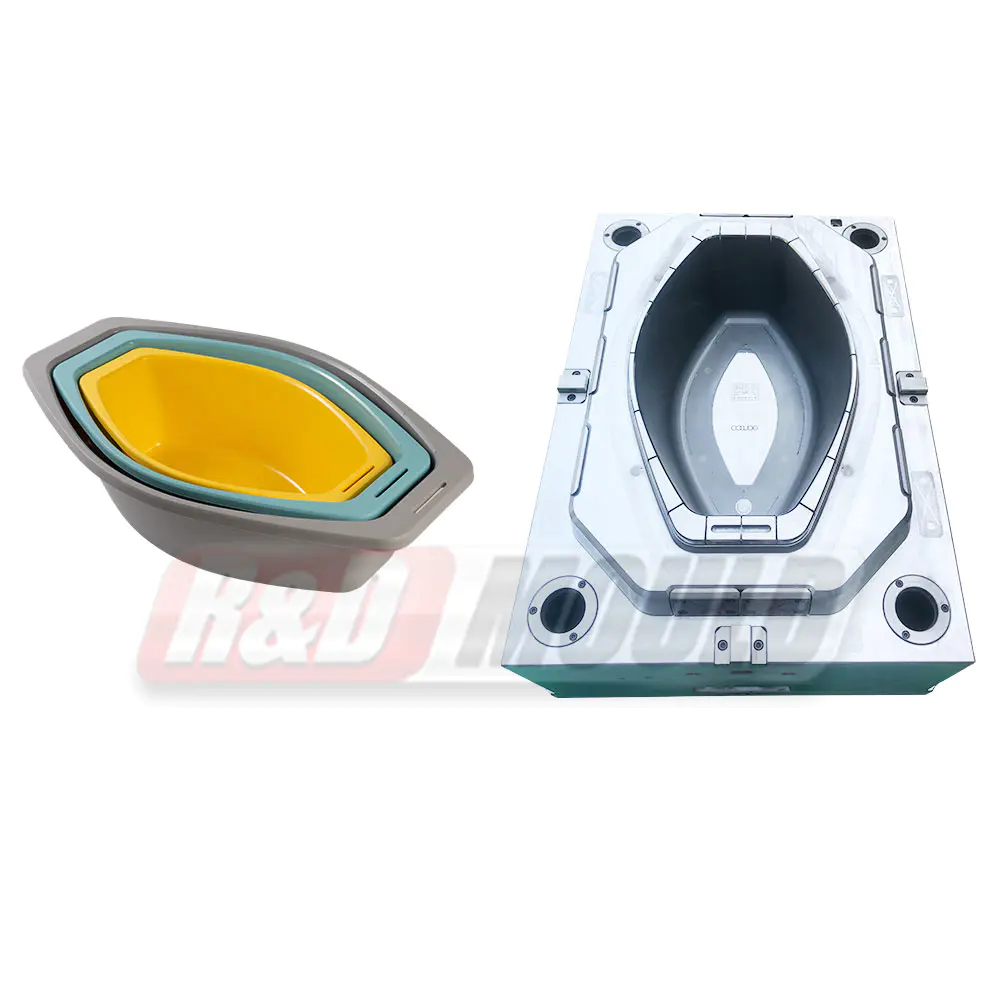

A common doubt among buyers is that a tool built for pressing composite components must wear out quickly, since the sheet it presses is full of glass strands and nobody enjoys picturing them scouring a polished surface cycle after cycle. Reading about SMC Mould does not settle that doubt by itself, because the name gets used both for the compound being pressed and for the tooling that shapes it, and the two are easy to confuse when a quotation arrives with the material line and the tool line sitting side by side.
The compound is a thermoset, which means it cures under heat and pressure into a hard shape and does not soften again when warmed, and it usually arrives as a flexible, slightly tacky sheet with resin, chopped glass and mineral filler running through it. You cut a piece to rough size, lay it in the open half of the die, and the closing press squeezes it out to the edges. Once cured, the item feels stiff and a little gritty, and it does not creep or sag the way many thermoplastics do when they sit warm for a long time.
The hardened steel that does the pressing is where the doubt about wear belongs. Glass is abrasive, so the faces that touch the sheet, particularly near the edges where the compound flows fiercely, are machined and polished and can be given a surface treatment, which a toolmaker will tell you decides how long the polish survives. I have run a thumbnail along a worn shut-off edge and felt a faint rounding that the eye missed, and that rounding is what eventually shows up as flash on the finished component.
RuiDing, based in Taizhou, makes plastic injection moulds and blow moulds and handles customized work from product design and prototyping through to delivery, so the questions about which steel and which finish suit a given compound belong at the drawing and sample stage, with the component geometry on the table. A sample pressed early shows where the fibres pack tightly, where a rib goes short of material and where a sharp corner is likely to chip.
Durability of the finished item comes from the glass strands carrying load inside the cured resin, so it tends to hold its shape under heat and steady weight, though it is brittle in its own way and cracks on a hard knock instead of denting. Thin sections near corners are the usual weak spot, and I check them by flexing a sample gently by hand and listening for a dry tick. A scratch in the surface stays visible for good, which is a reason to handle samples on a soft cloth.
Everyday care of the tooling is dull but it matters. Residue from the compound collects in the vents and around the ejector pins, so a technician wipes the faces with a soft cloth and a suitable cleaner instead of a steel scraper, because a scraper leaves a scratch that is copied into every item afterwards. Release agent goes on sparingly, since an over-wet surface leaves a blotchy, greasy finish you can see under a window light.
The sheet itself has a limited shelf life and is kept cool and sealed in its film until it is needed, and a roll that has sat on a warm shelf feels stiffer and flows poorly when pressed. Operators cut it on a clean bench, weigh the charge and place it so the thicker patches sit over the ribs, and the reading on the scale is a plain way to see why one cavity fills while a neighbour comes up short.
Heat is the other thing the metal puts up with. The tooling is held warm throughout the cycle, so it expands a little, and the two halves have to be machined to meet evenly once they are up to temperature, which is why a cold trial and a warm production run can feel different when the faces touch. Guide pins and bushings take that closing action day after day, and a worn bushing shows up as a bright polished ring or a faint squeak as the press comes down.
When I write a quotation for an SMC Mould, I list the compound, the metal and the surface finish on separate lines so nobody mistakes one for another. I keep the pages at https://www.rdmould.com beside me while comparing how the company describes its injection and blow tooling, and the last compound I pressed was a flat grey sheet with a faintly sticky skin that cured into a dull, slightly rough surface where the fibres sat just beneath.


