


Skin procedures such as a biopsy or Mohs micrographic surgery are very common and most people recover without problems. Still, a small surgical cream for healing wounds is a real wound. It needs sensible, consistent aftercare so that the skin can close cleanly and the scar can mature as well as possible. This article explains what usually happens after these procedures, how to care for the site day by day, where a cream for healing wounds may fit into your routine when to contact your care team. Your surgeon or nurse’s instructions always take priority over general guidance.
What Are Skin Biopsy and Mohs Surgery?
A skin biopsy removes a small sample of skin so it can be examined under a microscope. Methods include shave, punch and excisional biopsies. The resulting wound may be left to heal on its own or closed with stitches. Mohs micrographic surgery is a specialised technique used to treat certain skin cancers, most often basal cell and squamous cell carcinomas. The surgeon removes the tumour in thin layers and examines each layer under a microscope immediately, continuing until no cancer cells are seen.
This approach is valued because it removes the cancer while sparing as much healthy tissue as possible; it is widely reported to have high cure rates for suitable skin cancers. Depending on the size and location, the wound may be stitched, closed with a skin flap or graft, or left to heal by itself, which is called healing by secondary intention. Aftercare differs for each, which is why individual instructions matter.
Why Aftercare Matters
Good aftercare supports three goals.
Lowering infection risk
Any break in the skin can let bacteria in. Clean hands, clean dressings and appropriate cleaning reduce this.
Protecting the repair
Stitches, flaps and fresh tissue can be disturbed by friction, stretching, bumping and heavy activity.
Supporting scar quality
Wounds that stay clean, protected and undisturbed generally have a better chance of forming a flatter, less noticeable scar over time. Final scar appearance also depends on location, skin type, genetics and tension on the wound.
The Typical Healing Timeline
Every person heals at a different pace, but a general pattern looks like this.
|
Time after procedure |
What you may notice |
What to do |
|
First 24 to 48 hours |
Mild bleeding or oozing, tenderness, bruising, swelling |
Keep the original dressing as directed, rest, elevate if advised |
|
Days 3 to 7 |
Swelling begins to settle, edges look pink |
Clean and redress as instructed |
|
Weeks 1 to 2 |
Stitches may be removed, surface closes |
Continue gentle care, avoid strain |
|
Weeks 2 to 6 |
Pink or red scar, itching, tightness |
Protect from sun, avoid picking |
|
Months 3 to 12 |
Scar softens and fades |
Sun protection, gentle massage only if advised |
Wounds left to heal by secondary intention can take several weeks to close fully. Facial wounds often heal faster than wounds on the lower legs, where circulation and tension make healing slower.
Where a Post Surgical Wound Care Cream May Fit
Some surgeons recommend a bland ointment or cream once the initial dressing has been removed. Others prefer a different approach. This is why it is essential to ask before adding any product to a surgical site. If your care team agrees that a topical product is suitable, a postsurgical wound care cream may be used in a thin layer under a nonstick dressing, so that the dressing does not stick to the wound when it is changed. People who prefer botanical products sometimes ask about calendula based creams for this reason.As a rule, do not apply any product to a surgical wound until your team has confirmed it is appropriate, especially if you have stitches, a graft or a flap.
Daily Care A Practical Routine
Follow the written instructions you were given. If you were not given any, ask. A routine often looks like this.
-
Keep the first dressing on. Many surgeons ask you to leave the pressure dressing in place for 24 to 48 hours.
-
Wash your hands. Use soap and water before touching the dressing or wound.
-
Clean gently. Use the cleanser or saline your team recommends. Pat dry with clean gauze.
-
Apply the recommended product. Use a thin layer only.
-
Redress. Use a nonstick pad and secure it with paper tape or a light bandage.
-
Repeat daily or as instructed. Change the dressing sooner if it becomes soaked, dirty or loose.
The Calendula Question
Calendula has a long history in traditional skin care; it appears in many topical products designed for minor skin concerns. A calendula wound cream is often chosen by people who want a gentle, plant derived option. It is honest to say that the clinical evidence for calendula on surgical wounds is limited and mixed and homeopathic preparations are positioned differently from conventional medicines. This does not mean such products have no place in a person’s routine. It means they should be used thoughtfully, with your care team informed never as a replacement for prescribed treatment or professional followup.Anyone with allergies to plants in the daisy family should check before using calendula products.
About Vitynex
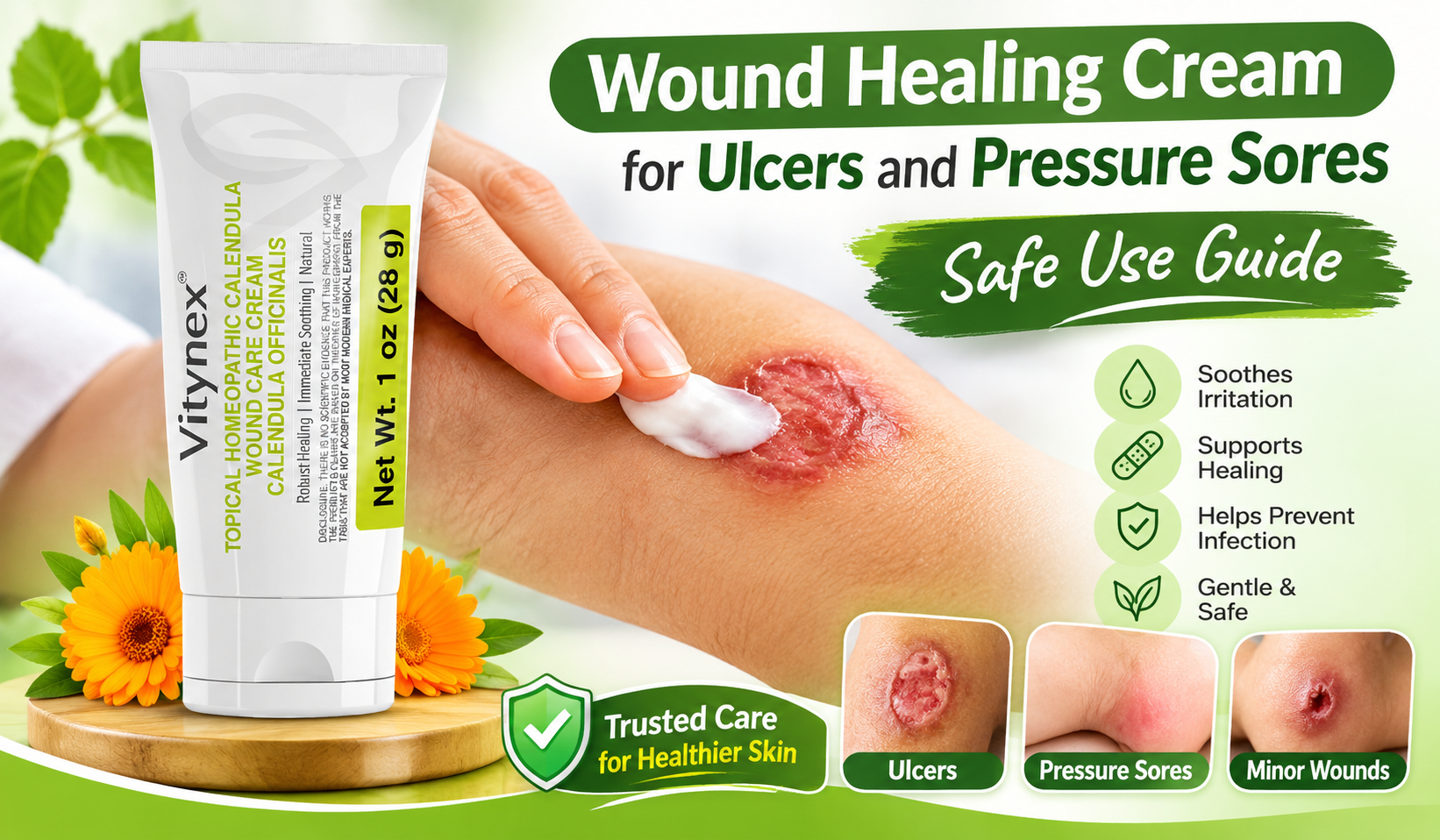
Vitynex is described on its product page as a homeopathic, calendula based cream suitable for wound care, including the care of skin after procedures such as Mohs surgery or a biopsy. If your surgeon or nurse approves the use of a topical cream, you can read about the Vitynex cream on the product page and compare it with other options. Whichever product you choose, apply a thin layer, use clean hands and a clean applicator stop and contact your team if the area becomes more red, painful, swollen or itchy.
Things to Avoid During Recovery
-
Soaking in baths, pools or hot tubs until your team says it is safe
-
Heavy lifting or strenuous exercise that pulls on the wound, especially on the back, chest, scalp or limbs
-
Picking at crusts or stitches
-
Smoking, which reduces blood flow and can slow healing and increase complications
-
Alcohol heavy cleansers unless instructed
-
Sun exposure on the wound; once healed, apply broadspectrum sunscreen on the scar for at least several months
-
Aspirin or antiinflammatory medicines unless approved, since some can increase bleeding risk; never stop prescribed medication without asking
Normal Healing or a Problem?
Some symptoms are expected, others are not.
Usually normal
-
Mild swelling and bruising, especially near the eyes
-
Mild tenderness for several days
-
A small amount of clear or pink fluid
-
Tightness or itching as the skin heals
Contact your care team promptly if you notice
-
Bleeding that soaks through the dressing and continues after 20 minutes of firm pressure
-
Increasing pain after the first few days
-
Spreading redness, warmth or swelling
-
Pus, a foul smell or a wound that opens
-
Fever or chills
-
Numbness or changes that are getting worse rather than better
For heavy bleeding that will not stop, seek emergency help.
Scar Care After the Wound Has Closed
Once the wound has fully closed and your surgeon has cleared you, you can focus on the scar. Options include sun protection, silicone sheets or gels if recommended gentle massage once advised. Scars generally continue to change for up to a year or more. Redness fades the scar flattens and softens over time. A wound care cream is intended for the healing stage and not for long term scar management, so switch to scarspecific advice once the skin is closed and your care team agrees.
Follow Up and Questions to Ask Your Care Team
Before leaving, it helps to ask
-
How long should the first dressing stay on?
-
How should I clean the wound?
-
Can I apply a cream or ointment? Which kind?
-
When will stitches be removed?
-
What activity limits do I have for how long?
-
What symptoms should make me call you who do I call after hours?
Write the answers down. For additional reading and product details, visit Curapep.
Key Takeaways
-
A biopsy or Mohs site is a real wound and needs consistent aftercare
-
Your surgeon’s instructions always come first
-
A cream for healing wounds may be used only if your team agrees
-
Calendula is a traditional botanical; evidence is mixed and homeopathic products are positioned differently from conventional medicines
-
Know the warning signs and act early
Frequently Asked Questions(FAQs)
Can I use a wound cream after Mohs surgery?
Only if your surgeon or nurse says it is suitable. Many teams have specific instructions for the first days, which may include a particular ointment or no product at all.
How long does a Mohs surgery wound take to heal?
It varies. Stitched wounds often close in one to two weeks on the surface, while wounds left to heal naturally can take several weeks. Scars keep maturing for months.
What does a normal healing surgical wound look like?
Expect pink or red edges, mild swelling and some tenderness at first, gradually improving each day.
Should I keep a biopsy site moist?
Moist, covered healing is the modern standard for most small wounds, but follow your clinician’s direction for your specific site.
Is it normal for a surgical scar to itch?
Mild itching is common as the skin heals. Avoid scratching and ask your care team if it becomes severe.
When can I shower?
It depends on the procedure and location. Some teams allow showering after 24 to 48 hours with the dressing protected. Ask for specific advice.
Can I wear makeup over the wound?
Usually not until the wound has fully closed and your team says it is fine.
Does calendula speed up healing?
Calendula is valued in traditional use, but evidence for faster healing on surgical wounds is limited and mixed, so do not rely on it alone.


