


How Refrigeration Equipment Manufacturers in India Can Prevent Condenser Scaling, Heat-Transfer Loss and High-Pressure Trips in Water-Cooled Refrigeration Systems
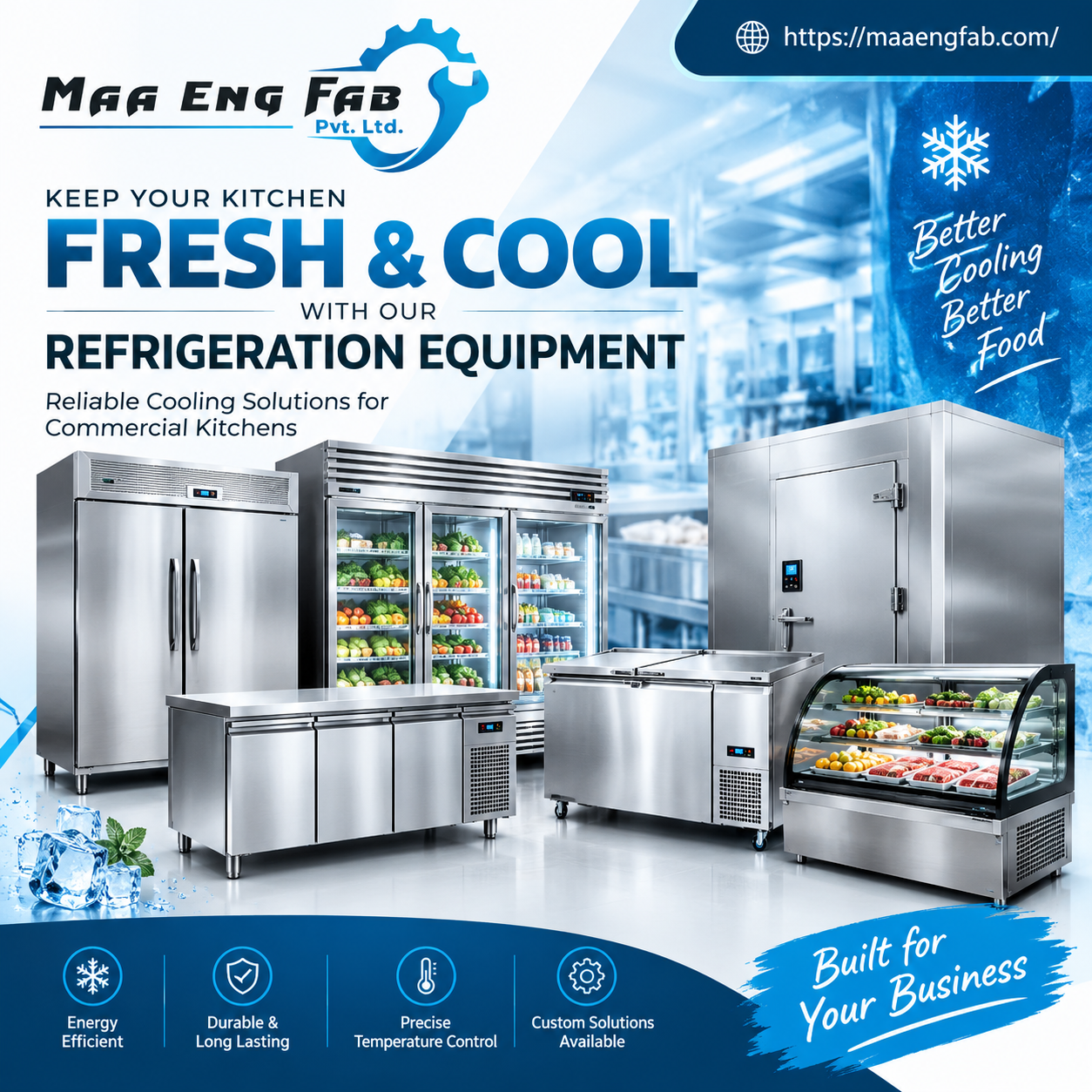
In industrial and commercial refrigeration, maintaining the correct condensing pressure is essential for reliable cooling performance, compressor protection and energy efficiency. However, water-cooled refrigeration systems can gradually lose performance when condenser surfaces accumulate mineral scale, suspended solids or other deposits.
These problems are not always immediately visible. A refrigeration system may continue operating while its condensing temperature rises, compressor power consumption increases and cooling performance becomes less stable. If operating pressure exceeds the equipment's protective limits, the system may shut down through a high-pressure safety control.
For businesses operating cold rooms, food-processing facilities, production plants and commercial cooling systems, these issues can increase maintenance requirements and interrupt daily operations.
Experienced Refrigeration Equipment Manufacturers in India should consider condenser heat-transfer performance, water quality, cooling-water circulation and maintenance access during equipment selection and system design.
This guide explains how condenser scaling develops, how it affects refrigeration performance, how to investigate high-pressure trips and which preventive measures buyers should evaluate before selecting refrigeration equipment.
1. What Is Condenser Scaling in Water-Cooled Refrigeration Systems?
A condenser removes heat from refrigerant and transfers it to another medium. In a water-cooled condenser, cooling water absorbs heat from the refrigerant through the heat-exchanger surface.
Depending on the water source and treatment conditions, minerals and other substances can accumulate on water-contact surfaces.
Common types of condenser deposits
Mineral scale: Calcium and magnesium compounds may precipitate when water chemistry and operating conditions favour deposition. Calcium carbonate scale is one common example.
Suspended solids: Sand, sediment and other particles can accumulate on heat-transfer surfaces or obstruct water passages, particularly when filtration is inadequate.
Corrosion products: Corrosion within connected piping or equipment can introduce deposits that interfere with heat transfer and water circulation.
Biological deposits: Under suitable conditions, microbial growth and biofilm can develop in water systems, including cooling towers and associated circuits.
These deposits are different problems and may require different treatment methods. A chemical treatment suitable for mineral scale may not be appropriate for corrosion deposits or biological fouling.
Important: Not every condenser performance problem is caused by scaling. Low water flow, air or non-condensable gases in the refrigerant circuit, incorrect refrigerant charge, faulty controls and other operating issues can produce similar symptoms.
2. How Mineral Scale Reduces Condenser Heat Transfer
A condenser transfers heat across several layers, including the refrigerant-side heat-transfer surface, the metal wall and the water-side surface.
When scale accumulates on the water-side surface, it introduces additional thermal resistance. Heat must pass through this deposit before reaching the cooling water.
As a result, the condenser may require a larger temperature difference to transfer the same amount of heat.
This can cause the refrigerant to condense at a higher temperature and pressure, depending on the system's operating conditions.
Why a thin deposit can matter
A deposit does not need to completely block a tube to affect performance. Even a relatively thin layer with poor thermal conductivity can reduce overall heat-transfer effectiveness.
The actual impact depends on factors such as:
-
Deposit thickness and composition.
-
Heat-exchanger design and surface area.
-
Cooling-water temperature and flow.
-
Refrigerant-side operating conditions.
-
Load on the refrigeration system.
-
Existing condition of the condenser.
This is why condenser inspection should not focus only on visible blockages. Heat-transfer performance and operating measurements are equally important.
3. The Relationship Between Condensing Pressure and Compressor Energy Consumption
When condenser heat rejection becomes less effective, the refrigeration system may need to operate at a higher condensing temperature to transfer heat to the available cooling water.
For a given refrigerant, saturation pressure increases with saturation temperature. Consequently, higher condensing temperatures generally correspond to higher condensing pressures.
The compressor may then operate across a greater pressure difference between its suction and discharge sides.
Depending on compressor type, capacity control and operating conditions, this can increase power consumption, discharge temperature or mechanical loading and may reduce available cooling capacity.
Example of the performance problem
Consider a water-cooled refrigeration system operating under a relatively stable cooling load.
Initially, the condenser transfers heat effectively because the cooling-water circuit is clean and adequately supplied.
Over time, mineral deposits accumulate on the heat-transfer surfaces. If the water flow and inlet temperature remain similar, the condenser may struggle to reject the same heat load without a higher refrigerant condensing temperature.
The controller or compressor may compensate within its operating limits. If the condition worsens, the system may experience reduced performance or activate a high-pressure safety shutdown.
The exact effect should be established from operating data rather than assumed from the presence of scale alone.
4. How to Recognise Possible Condenser Fouling
Early detection is important because gradual performance degradation can otherwise go unnoticed.
The following observations can indicate a condenser-side problem:
-
Condensing pressure or saturation temperature is higher than expected for comparable conditions.
-
The temperature difference between condensing refrigerant and leaving cooling water has increased.
-
Compressor power consumption has increased at a comparable load.
-
Cooling capacity has declined without an obvious change in demand.
-
Cooling-water flow has decreased or become unstable.
-
Strainers or water passages show deposits or blockage.
-
High-pressure safety trips occur repeatedly during high-load operation.
These symptoms are not conclusive proof of scale. For example, a high condensing pressure can also result from excessive cooling-water inlet temperature, inadequate water flow, air or non-condensable gases in the refrigerant circuit, overcharging or a control problem.
A qualified technician should compare multiple measurements with the equipment manufacturer's operating data before recommending cleaning or repairs.
5. Cooling-Water Hardness and Water Quality Management
Water chemistry plays an important role in condenser reliability. Water with high concentrations of scale-forming minerals may create greater scaling risk under unsuitable operating conditions.
However, hardness alone does not determine the complete risk. Other factors include alkalinity, pH, dissolved solids, temperature, concentration cycles, water treatment and the specific heat-exchanger design.
What should be evaluated?
Water hardness: Calcium and magnesium concentrations help assess the potential for certain mineral deposits.
Alkalinity and pH: These influence mineral precipitation, corrosion behaviour and treatment requirements.
Dissolved solids: Concentrations of dissolved substances can change as water evaporates or circulates through a cooling system.
Suspended solids: Particles entering the system may contribute to fouling and blockage.
Biological activity: Cooling-water systems may require appropriate monitoring and control of microbial growth.
Why cooling-tower water requires attention
In evaporative cooling towers, some water evaporates while dissolved minerals remain in the circulating water. As water is lost and makeup water is added, dissolved substances can become more concentrated.
If concentration and water chemistry are not managed appropriately, scale formation and other water-side problems may become more likely.
A suitable water-treatment plan should be designed for the actual water source, equipment materials, system configuration and operating conditions. There is no single chemical treatment or hardness limit that applies universally to every condenser.
6. How Low Cooling-Water Flow Affects Condenser Performance
A condenser can lose performance even when its heat-transfer surfaces are relatively clean.
If cooling-water flow falls below the required design range, less water may be available to absorb and transport heat. This can increase the temperature rise across the water circuit and contribute to higher condensing pressure.
Common causes of reduced water flow
-
Blocked strainers or filters.
-
Fouled water passages.
-
Incorrect valve positions.
-
Pump wear or unsuitable pump operation.
-
Air trapped in sections of the water circuit.
-
Incorrect control settings.
-
Leakage or other hydraulic problems.
-
Water-system design that does not provide the required flow.
Practical diagnostic checks
First, compare the measured cooling-water flow with the condenser's specified requirement. Check inlet and outlet water temperatures and review the pressure difference across the relevant water circuit where suitable measurement points are available.
Inspect strainers, valves, pumps and accessible piping for signs of restriction or abnormal operation.
If the water circuit is operating correctly but the condenser still performs poorly, investigate the heat-transfer surfaces and refrigerant-side conditions.
Do not assume that increasing pump output is always the correct solution. The required flow, allowable pressure drop and operating limits must follow the heat-exchanger and system design.
7. Understanding High-Pressure Trips and Their Root Causes
A high-pressure trip is a protective response intended to prevent refrigeration equipment from operating beyond specified pressure limits. Repeated trips should be treated as a fault requiring investigation, not as a routine operating condition.
Potential causes in water-cooled systems
| Possible cause | What to investigate | Appropriate next step |
|---|---|---|
| Condenser scaling | Heat-transfer performance and water-side deposits | Confirm fouling and select an approved cleaning method |
| Low cooling-water flow | Flow readings, valves, strainers and pump performance | Restore the specified water flow |
| High cooling-water inlet temperature | Water source and cooling-tower performance | Investigate the water-cooling system |
| Non-condensable gases | Refrigerant-circuit service history and diagnostic evidence | Have a qualified technician assess the circuit |
| Incorrect refrigerant charge | Charging records and operating measurements | Verify charge using the approved procedure |
| Faulty pressure control or sensor | Calibration, wiring and measured pressure comparison | Test and repair the control system |
| Refrigerant-side restriction | Relevant pressure and temperature measurements | Diagnose the restriction using approved procedures |
| Excessive system load | Actual load and equipment operating envelope | Confirm equipment suitability and load conditions |
This table provides a diagnostic starting point, not a substitute for a full system assessment.
Never bypass a high-pressure safety control to keep equipment running. If the system trips repeatedly, it should be investigated by qualified refrigeration personnel before being returned to normal service.
8. A Step-by-Step Condenser Troubleshooting Procedure
A structured approach reduces unnecessary cleaning, component replacement and repeated service visits.
Step 1: Review the operating history
Record when the problem occurs and whether it is associated with high ambient temperatures, increased cooling demand, startup or a change in water-system operation.
Compare current readings with historical measurements taken under similar conditions.
Step 2: Check cooling-water inlet and outlet temperatures
Measure water temperatures at the specified locations using suitable instruments.
Calculate the water-side temperature difference:
Water temperature difference = Outlet water temperature − Inlet water temperature
Interpret this value alongside the measured flow rate and refrigeration load. A large or small temperature difference does not independently prove that the condenser is scaled.
Step 3: Verify water flow
Confirm whether the actual water flow meets the manufacturer's requirement. Inspect strainers, valves, pumps and other relevant parts of the water circuit.
Step 4: Review refrigerant-side operating conditions
Record suction and discharge pressures, relevant temperatures, compressor current and operating load.
Use the correct refrigerant pressure-temperature relationship to interpret saturation conditions. Do not compare pressure readings without considering the refrigerant and measurement conditions.
Step 5: Evaluate the condenser approach
For a water-cooled condenser, one useful performance indicator is the difference between the refrigerant condensing saturation temperature and the leaving cooling-water temperature.
Condenser approach = Condensing saturation temperature − Leaving cooling-water temperature
The exact definition and measurement points should be consistent with the manufacturer's documentation.
A rising approach temperature under comparable operating conditions can indicate deteriorating heat-transfer performance. However, the result must be interpreted with water flow, load, inlet-water temperature and measurement accuracy in mind.
Step 6: Inspect the heat-transfer surfaces
If measurements indicate possible fouling, arrange an appropriate internal inspection where the condenser design permits it. Confirm the nature of the deposit before selecting a cleaning method.
Step 7: Verify the result after corrective work
After cleaning or repairs, repeat the relevant measurements under comparable conditions. Record water flow, inlet and outlet temperatures, condensing conditions and compressor operating data.
This comparison helps establish whether the intervention actually improved performance.
9. Choosing the Correct Condenser Cleaning Method
Cleaning should be based on the type of deposit, heat-exchanger construction and manufacturer's recommendations.
Mechanical cleaning
Where the design permits access to tubes or water passages, suitable mechanical methods may be used to remove deposits.
The cleaning tools must be compatible with the tube material, internal geometry and surface condition. An unsuitable tool can damage heat-transfer surfaces or protective coatings.
Chemical descaling
Certain mineral deposits may require a compatible chemical descaling procedure.
Before treatment, verify:
-
The deposit composition, where possible.
-
Compatibility with tube, tube-sheet and gasket materials.
-
Approved chemical concentration and temperature.
-
Required circulation time and flow conditions.
-
Neutralisation and disposal requirements.
-
Final rinsing and post-cleaning inspection procedures.
Not every condenser can safely use the same chemical. Strong or incompatible chemicals may cause corrosion, damage joints or shorten equipment life.
Chemical cleaning should be performed by qualified personnel following the heat-exchanger manufacturer's instructions and applicable environmental and workplace requirements.
What should be avoided?
Do not select a cleaning chemical solely because it removes scale quickly. Do not exceed approved concentrations, use unverified cleaning tools or return the system to service without completing the required checks.
The objective is to restore heat-transfer performance without damaging the equipment.
10. Preventive Water Treatment and Condenser Maintenance
Preventive maintenance should address the conditions that allow deposits to form, rather than relying exclusively on periodic descaling.
Establish a water-quality baseline
Test the makeup and circulating water as appropriate for the system. Document relevant chemistry and compare results with the water-treatment plan and equipment requirements.
Monitor concentration cycles where applicable
For cooling-tower systems, monitor concentration and water-management practices. Appropriate blowdown and makeup-water control can help manage dissolved mineral levels.
The correct operating range depends on water chemistry, treatment method, materials and system design.
Maintain filtration
Inspect strainers and filters at an interval appropriate for the incoming water quality and observed contamination. A filter that is blocked or incorrectly sized can itself contribute to low flow.
Check pumps and valves
Inspect pump operation, valve positions and other hydraulic components. Unexpected flow changes should be investigated promptly.
Track performance trends
Maintain records of water flow, inlet and outlet temperatures, condensing pressure, approach temperature and relevant compressor readings.
Trends taken under comparable operating conditions are often more useful than isolated readings.
Plan inspections according to risk
Inspection frequency should reflect operating hours, water quality, equipment criticality, historical fouling and manufacturer guidance. Systems with unstable water chemistry or repeated fouling may need more frequent assessment.
11. How Condenser Design Influences Long-Term Reliability
When comparing refrigeration systems, buyers should evaluate more than the nominal cooling capacity.
The condenser's design, water requirements, materials, maintenance access and operating envelope can affect long-term reliability.
Heat-exchanger selection
The selected condenser should be suitable for the specified refrigeration load, refrigerant, cooling-water conditions and expected operating range.
A condenser should not be judged solely by physical size. Its documented heat-rejection capability and operating requirements must match the application.
Water-side pressure drop
The water circuit should provide the required flow without exceeding the design's allowable pressure drop. Excessive resistance can increase pumping requirements or contribute to inadequate flow if the hydraulic system is unsuitable.
Materials and water chemistry
Heat-exchanger materials should be compatible with the expected water quality and approved treatment programme. Corrosion resistance depends on the material, water chemistry, operating conditions and maintenance practices.
Maintenance access
Where possible, evaluate whether inspection and cleaning can be performed without unnecessary disassembly or prolonged downtime.
Ask the supplier to identify which parts are accessible, what cleaning procedures are permitted and what maintenance intervals are recommended.
Controls and protection
The equipment should include appropriate pressure protection and control arrangements for its intended application. Buyers should understand how alarms, shutdowns and fault indications are documented and serviced.
12. Buyer Checklist for Refrigeration Equipment Manufacturers in India
Before purchasing a water-cooled refrigeration system, use the following checklist to compare technical suitability.
-
Confirm the required cooling capacity and expected operating load.
-
Verify condenser heat-rejection capacity under the specified design conditions.
-
Obtain the required cooling-water flow and temperature range.
-
Review the water-side pressure-drop specification.
-
Confirm the recommended water-quality and treatment requirements.
-
Check whether the heat-exchanger materials suit the intended water conditions.
-
Ask how condenser fouling and restricted flow can be identified.
-
Confirm access for inspection, descaling and maintenance.
-
Review high-pressure protection and fault-diagnostic provisions.
-
Request commissioning measurements and operating documentation.
-
Understand the recommended preventive maintenance schedule.
-
Confirm technical support availability for recurring performance issues.
A technically suitable Refrigeration Equipment Manufacturer in India should be able to explain the operating assumptions behind its selection and provide documentation relevant to the proposed system.
When comparing Refrigeration Equipment Suppliers in India, buyers should evaluate technical support, installation requirements and service arrangements alongside purchase price.
13. Common Mistakes That Increase Condenser Maintenance Costs
Cleaning without confirming the cause
If the actual problem is inadequate water flow or a faulty sensor, descaling may not resolve the high-pressure trip.
Better approach: Review measurements first and inspect the condenser when evidence indicates fouling.
Ignoring water chemistry
Cleaning may temporarily restore performance, but repeated scaling can return if water-treatment conditions remain unsuitable.
Better approach: Investigate the water source, concentration control and treatment plan.
Treating every high-pressure trip as a condenser problem
High discharge pressure has several possible causes. Replacing controls or cleaning the condenser without adequate diagnosis may waste time and money.
Better approach: Evaluate water-side, refrigerant-side and control-system evidence together.
Using an unsuitable descaling chemical
An aggressive or incompatible chemical can damage heat-exchanger materials.
Better approach: Follow the manufacturer's approved cleaning procedure and confirm material compatibility.
Skipping performance verification
Completing maintenance does not automatically prove that heat transfer has improved.
Better approach: Compare relevant operating readings before and after corrective work under similar load and water conditions.
14. Frequently Asked Questions
What causes scaling in a water-cooled condenser?
Scaling can develop when dissolved minerals precipitate and accumulate on heat-transfer surfaces. Water chemistry, temperature, concentration and treatment practices influence the risk.
Can condenser scaling cause high-pressure trips?
Yes. Scale can reduce heat-transfer effectiveness and contribute to higher condensing pressure. However, low water flow, high inlet-water temperature, refrigerant-circuit problems and control faults can also cause high-pressure trips.
How can I tell whether a condenser needs cleaning?
Look for a deterioration in performance indicators under comparable conditions, such as increased condenser approach temperature, abnormal condensing pressure or reduced water flow. Confirm the cause before choosing a cleaning method.
Does high water hardness always mean rapid scaling?
No. Hardness is one important factor, but scaling also depends on alkalinity, pH, temperature, dissolved solids, concentration cycles, treatment and system design.
How often should a water-cooled condenser be descaled?
There is no universal interval. The schedule should be based on water quality, operating conditions, inspection results, performance trends and manufacturer recommendations.
Can cleaning alone prevent future condenser fouling?
Not necessarily. Cleaning removes existing deposits, while appropriate water treatment, filtration, flow management and performance monitoring help control recurrence.
What should buyers ask refrigeration equipment suppliers?
Ask about condenser selection, required water flow, allowable pressure drop, material compatibility, cleaning access, water-treatment requirements, commissioning data and technical support.
Conclusion
Condenser scaling, heat-transfer loss and high-pressure trips can affect refrigeration reliability, energy consumption and maintenance costs. Effective prevention requires a combination of appropriate condenser selection, water-quality management, reliable cooling-water circulation, performance monitoring and correctly executed cleaning procedures.
The most effective troubleshooting approach uses measurements to distinguish between scale, low water flow, high inlet-water temperature, refrigerant-circuit faults and control problems. This prevents unnecessary maintenance and helps ensure that corrective action addresses the actual cause.
For buyers evaluating Refrigeration Equipment Manufacturers in India, condenser design and maintainability deserve the same attention as cooling capacity and initial cost. A well-documented system with suitable water requirements, accessible heat-transfer surfaces and a practical maintenance plan can support more predictable long-term operation.
 Portuguese
 English
 Arabic
 French
 Spanish
 Deutsch
 Turkish
 Dutch
 Italiano
 Russian
 Romaian
 Portuguese (Brazil)
 Greek