


South Korea Denim Market to Reach USD 1.78 Billion by 2032, Growing at 4.2% CAGR
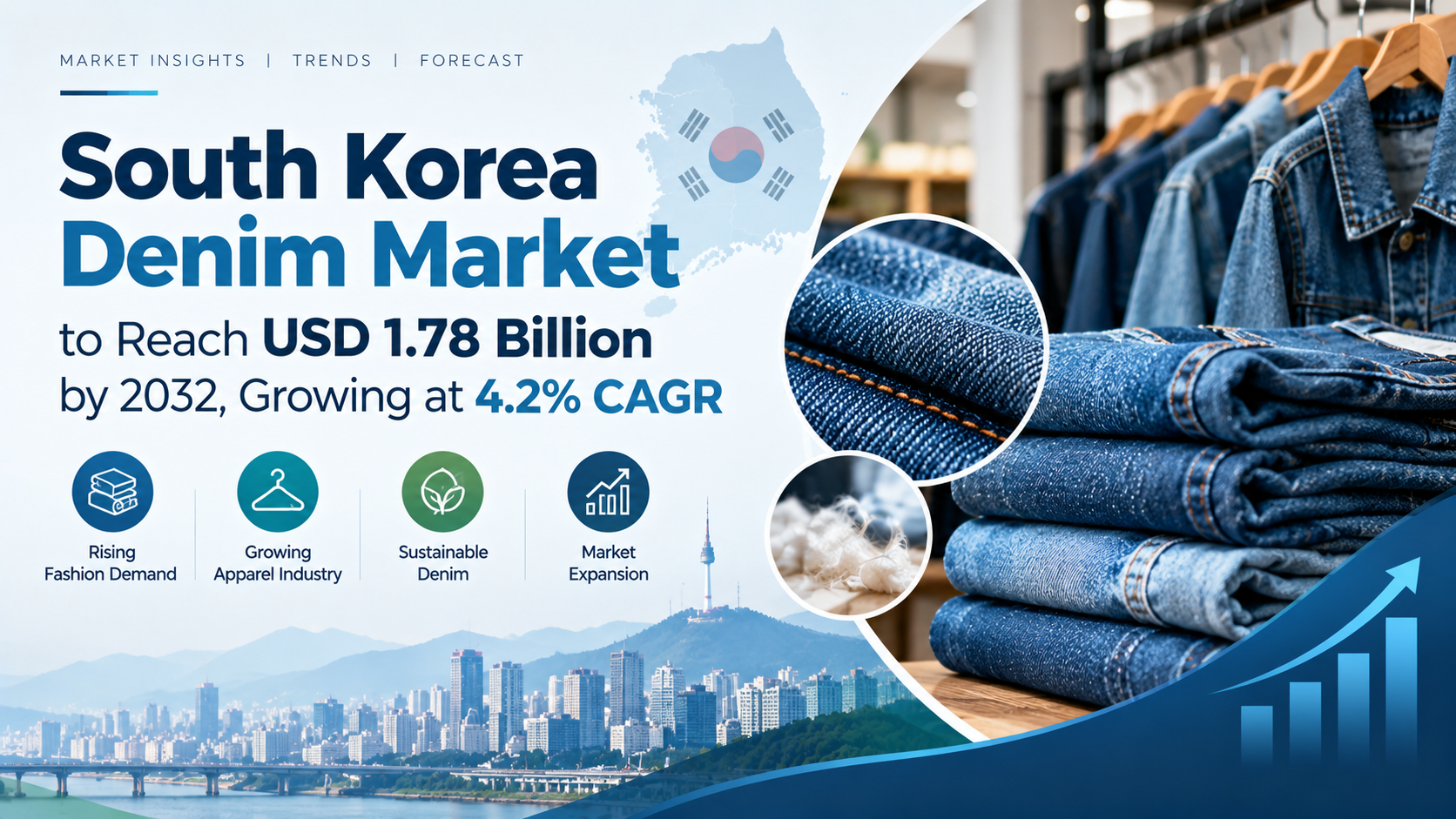
According to 24ChemicalResearch’s South Korea Denim Market report, the market was valued at USD 1.28 billion in 2024 and is projected to grow from USD 1.34 billion in 2025 to USD 1.78 billion by 2032, exhibiting a compound annual growth rate (CAGR) of 4.2% during the forecast period. Market expansion is supported by South Korea’s domestic fashion industry, export capabilities, premium denim demand, and increasing interest in sustainable production methods.
View the complete report: https://www.24chemicalresearch.com/reports/278889/global-south-korea-denim-market
Market Overview
Denim is a durable cotton twill fabric, typically dyed with indigo, and used in apparel such as jeans, jackets, and shirts. Its versatility across casual and fashion wear continues to support demand, while producers and brands are placing greater emphasis on sustainable production methods, including waterless dyeing and recycled fibers.
The market includes light denim (under 10 oz/sq yd), medium denim (10–14 oz/sq yd), and heavy denim (over 14 oz/sq yd). The report identifies medium denim as the leading type because of its balance of comfort and durability for everyday wear. Jeans are the dominant application, while the women’s consumer segment is showing the strongest growth, supported by fashion innovation and changing style preferences.
Key Growth Drivers
Sustainable Denim Production Gaining Traction
Demand for sustainable denim is increasing as consumers and brands focus on environmentally conscious apparel. The report notes that textile manufacturing accounts for 20% of global wastewater and that more than 65% of South Korean consumers under 35 prioritize eco-friendly apparel purchases. Domestic brands are adopting waterless dyeing techniques and organic cotton. It also reports that Beyond Closet and 8Seconds launched sustainable denim lines in 2024 using collections with up to 90% recycled materials.
Premiumization Driving Market Value Growth
The premium denim segment, defined in the report as products priced above USD 150, is growing at 7.3% annually. South Korea’s luxury denim market accounts for 28% of total denim sales, compared with 19% five years earlier. The report also highlights limited-edition collaborations, craftsmanship, heritage branding, and tailored styles as elements supporting premium demand.
Comfort, Smart-Casual Styling, and Retail Modernization
Hybrid work patterns are supporting demand for denim that bridges formal and casual aesthetics. The report states that sales of tailored denim jackets increased by 42% year over year in Q1 2024. Live commerce, omnichannel retail, and digital shopping tools are also shaping how consumers discover and purchase denim.
Innovation in Materials and Sustainable Manufacturing
Waterless dyeing adoption has increased by more than 35% since 2022, reducing water consumption by 60% compared with traditional methods. Recycled cotton blends account for nearly 25% of denim fabric used by domestic manufacturers. Brands are also experimenting with plant-based indigo, organic fibers, stretch blends, temperature-regulating fabrics, and odor-resistant denim.
Market Restraints and Challenges
Raw-Material Import Dependence
South Korea imports more than 80% of its cotton and denim fabrics, primarily from China, Vietnam, and Pakistan. The report notes that fabric costs rose by 18–22% year over year in 2024, creating margin pressure for manufacturers, particularly in the competitive mid-price segment.
Demographic Headwinds and Fast-Fashion Competition
The report states that South Korea’s population aged 15–34 is shrinking by 1.2% annually. Entry-level denim sales have fallen 15% since 2021, while ultra-fast-fashion platforms have shortened product lifecycles from 12–18 months to 3–4 weeks. Inventory management and the cost of establishing circular-economy systems are additional challenges.
Market Segmentation
By Type
· Light denim: under 10 oz/sq yd.
· Medium denim: 10–14 oz/sq yd; identified as the leading type because of its balance of comfort and durability.
· Heavy denim: over 14 oz/sq yd.
By Application
· Jeans — the dominant application.
· Shirts.
· Jackets.
· Accessories.
· Others.
Additional Segmentation
The report also segments the market by consumer group—men, women, children, and unisex—and by production method: conventional, eco-friendly/sustainable, recycled, and organic. The women’s segment is identified as the fastest-growing consumer group, while eco-friendly denim is gaining traction.
Emerging Opportunities
The report highlights smart denim and wearable-technology integration, including temperature-regulating denim, flexible conductive fabrics, and NFC tags. It also identifies export opportunities for South Korean denim design aesthetics, with overseas sales for the cited design-led brands growing by 28% annually since 2022. The domestic smart clothing market is projected in the report to reach USD 780 million by 2027.
Regional Market Analysis
Seoul Metropolitan Area
Seoul is described as South Korea’s fashion capital and a leading denim market, supported by urban consumers, fashion-conscious shoppers, premium retail, and districts such as Myeongdong, Gangnam, and Hongdae. It is also a key testing ground for new denim collections, finishes, and styling approaches.
Busan and Southeast Region
Busan is a significant secondary market. Its coastal lifestyle and humid climate contribute to interest in lighter-weight denim, relaxed fits, and practical applications. The region also has a manufacturing base and retail presence for international brands.
Gyeonggi Province
Gyeonggi Province benefits from proximity to Seoul and expanding retail infrastructure, including shopping malls and outlet centers. Consumer demand balances metropolitan fashion trends with practical, value-oriented denim purchases.
Daegu and North Gyeongsang Region
This historically important textile-manufacturing region remains relevant through production capabilities, local brand development, and expertise in denim processing and finishing. Medium and heavy denim are noted as important categories in the region.
Jeolla Region and Southern Areas
The southwestern and southern areas show evolving market dynamics as urbanization and retail development support wider adoption of fashion trends. Developing retail markets offer opportunities for domestic and international denim brands.
Competitive Landscape and Key Players
The report describes a competitive market comprising domestic brands and international players adapting to Korean consumer preferences. It identifies S.I.Village and 8Seconds as leading through extensive retail networks and the ability to respond quickly to trends. Other companies named in the report include:
· S.I.Village
· 8Seconds
· Solid Homme
· Plac
· SJYP
· TNGT
· LAP
· Andersson Bell
· COVERNAT
· Beyond Closet
The report also discusses social-media-first distribution, sustainable production, waterless dyeing, e-commerce partnerships, and AI-driven inventory systems as elements shaping competition.
Report Summary
South Korea’s denim market is projected to increase from USD 1.34 billion in 2025 to USD 1.78 billion by 2032, at a CAGR of 4.2%. Growth themes include sustainable denim production, premiumization, evolving casual and smart-casual preferences, digital retail, and innovation in materials. The market also faces pressure from imported raw-material costs, demographic changes, fast-fashion competition, and the investment required for circular production systems.
Key Report Highlights
· Market value: USD 1.28 billion in 2024.
· Projected market value: USD 1.34 billion in 2025 and USD 1.78 billion by 2032.
· Forecast CAGR: 4.2%.
· Leading type: medium denim, valued for its balance of comfort and durability.
· Leading application: jeans.
· Strong growth themes: sustainable manufacturing, premium denim, digital retail, and innovative fabric blends.
· Regional coverage includes Seoul Metropolitan Area, Busan and Southeast Region, Gyeonggi Province, Daegu and North Gyeongsang Region, and Jeolla Region and Southern Areas.
· Key companies include S.I.Village, 8Seconds, Solid Homme, Plac, SJYP, TNGT, LAP, Andersson Bell, COVERNAT, and Beyond Closet.
Frequently Asked Questions (FAQs)
Q: What is the size of the South Korea denim market?
A: The report states that the market was valued at USD 1.28 billion in 2024 and is projected to grow from USD 1.34 billion in 2025 to USD 1.78 billion by 2032.
Q: What is the expected CAGR?
A: The market is projected to grow at a CAGR of 4.2% during the forecast period stated in the report.
Q: Which denim type leads the market?
A: Medium denim leads, supported by its balance of comfort and durability for everyday wear.
Q: Which application dominates the market?
A: Jeans are identified as the dominant application.
Q: What are the key growth drivers?
A: Key drivers described in the report include sustainable denim production, premiumization, demand for comfortable and stylish denim, and retail modernization.
Q: Which companies are identified as key players?
A: The report lists S.I.Village, 8Seconds, Solid Homme, Plac, SJYP, TNGT, LAP, Andersson Bell, COVERNAT, and Beyond Closet.
Q: Which regions are covered in the regional analysis?
A: The report discusses the Seoul Metropolitan Area, Busan and Southeast Region, Gyeonggi Province, Daegu and North Gyeongsang Region, and Jeolla Region and Southern Areas.
View the Complete Report
https://www.24chemicalresearch.com/reports/278889/global-south-korea-denim-market
Download the Free Sample Report
https://www.24chemicalresearch.com/download-sample/278889/global-south-korea-denim-market
Contact Us
Website: Chemical Market Research | Global Chemical Market Research Reports | 24ChemicalResearch
Asia: +91 9169162030
 Spanish
 English
 Arabic
 French
 Portuguese
 Deutsch
 Turkish
 Dutch
Dutch
 Italiano
 Russian
 Romaian
 Portuguese (Brazil)
 Greek
Greek