


How to Choose Pizza Equipment for Multi-Outlet Restaurants: Standardization, Capacity and Maintenance Planning
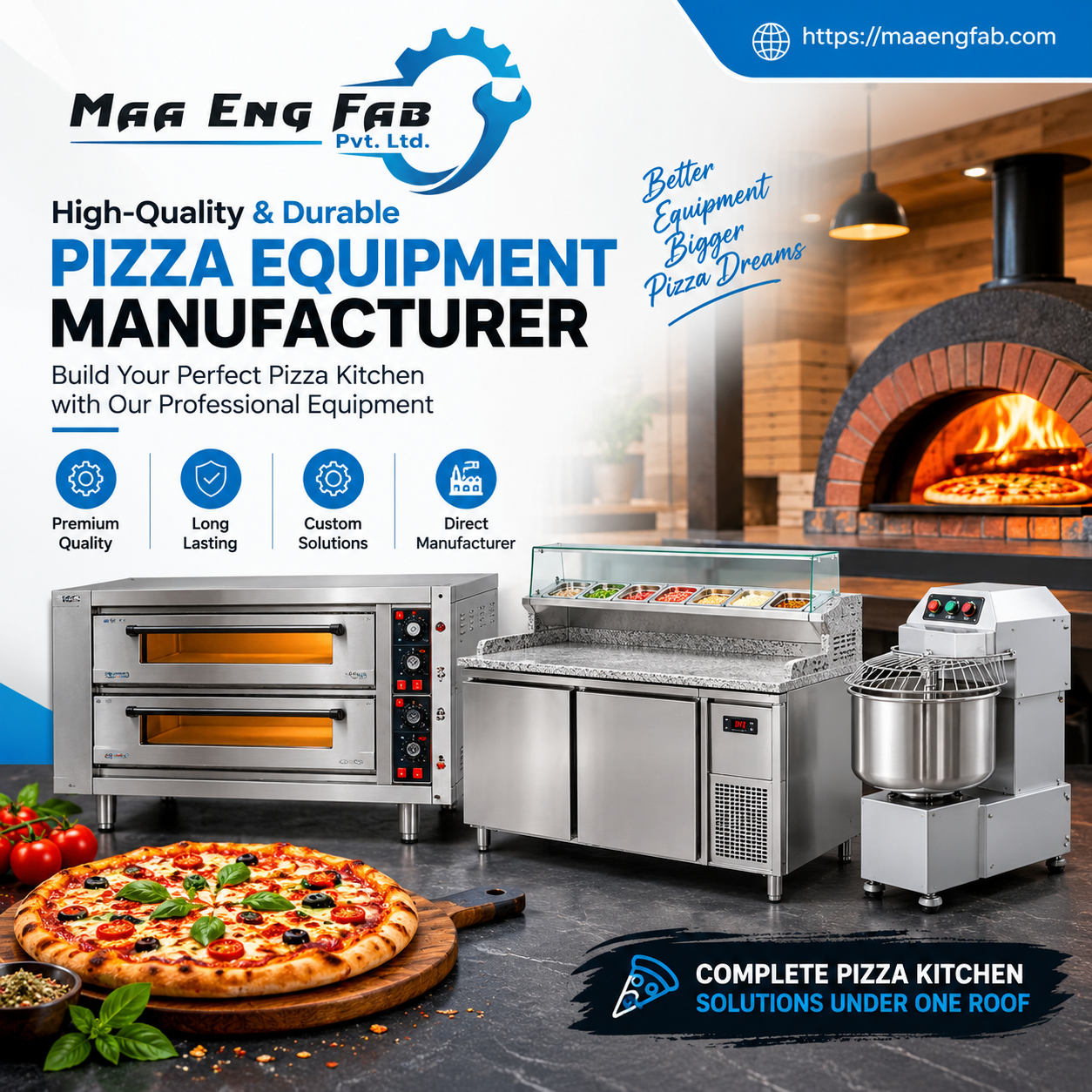
ning strategies. When a restaurant brand expands to several locations, differences in equipment, kitchen layouts, staff practices and maintenance can create inconsistencies in production and product quality.
For multi-outlet restaurants, pizza equipment should therefore be selected as part of a standardized operating system. The objective is to make each outlet capable of producing the required menu consistently while allowing equipment capacity to match local demand and kitchen conditions.
A structured equipment strategy can also simplify staff training, maintenance, spare-parts management and future expansion.
1. Start With a Multi-Outlet Equipment Strategy
Before selecting equipment for individual locations, establish which parts of the production process should remain standardized across the brand.
Review:
- Pizza sizes and styles
- Dough recipes and production methods
- Expected order volume
- Ingredient handling
- Baking procedures
- Preparation workflow
- Cleaning procedures
- Equipment operating methods
Not every outlet needs exactly the same equipment capacity. However, the operating principles should remain consistent wherever practical.
For example, a high-volume flagship outlet may require greater production capacity than a smaller location, while both outlets can use the same equipment category and standardized operating procedures.
2. Compare the Production Requirements of Each Outlet
Multi-outlet restaurants should avoid using a single capacity assumption for every location.
Each outlet may have different:
- Daily sales
- Peak-hour orders
- Kitchen size
- Staff count
- Menu mix
- Delivery demand
- Dine-in demand
- Storage capacity
- Operating hours
A useful planning method is to create an outlet-by-outlet production profile.
For each location, record the expected pizzas per hour during normal and peak periods. This information can then be used to determine practical equipment requirements.
3. Standardize Equipment Categories
Standardization can simplify restaurant expansion.
A brand may establish preferred equipment categories for:
- Dough mixers
- Dough preparation
- Refrigeration
- Pizza preparation counters
- Pizza ovens
- Stainless-steel workstations
- Storage equipment
- Finishing stations
Standardization does not necessarily mean purchasing identical models for every outlet.
Instead, the brand can define approved equipment specifications and select different capacities where necessary.
This provides flexibility while maintaining consistency.
4. Match Pizza Oven Capacity to Outlet Demand
The pizza oven is a critical production component, but capacity should be determined using actual demand.
Consider:
- Pizza diameter
- Dough thickness
- Baking time
- Number of pizzas per load
- Recovery performance
- Peak-hour orders
- Oven operating schedule
- Available space
- Utility requirements
A small outlet with limited demand may not need the same oven capacity as a busy delivery-focused location.
On the other hand, an undersized oven can become a major bottleneck during peak periods.
The objective is to balance oven capacity with dough preparation, topping and finishing capacity.
5. Standardize Dough Production
Dough consistency is particularly important when a restaurant operates multiple locations.
Different mixers, batch sizes or preparation procedures can create variations in dough characteristics if employees are not following standardized processes.
Develop clear specifications for:
- Ingredient quantities
- Batch size
- Mixing procedure
- Mixing time
- Dough temperature targets where applicable
- Portion weight
- Resting or fermentation procedure
- Storage method
The equipment should support the standardized process rather than forcing each outlet to develop its own method.
6. Consider Central Kitchen and Outlet-Based Dough Production
Some multi-outlet businesses produce dough centrally, while others prepare it at each restaurant.
Both approaches require different equipment planning.
Central Production
A central facility may require:
- Higher-capacity mixers
- Dough processing equipment
- Larger refrigeration
- Portioning systems
- Transport containers
- Controlled storage
The outlets then need appropriate equipment for receiving, storing and handling the prepared dough.
Individual Outlet Production
Each restaurant may require:
- Dough mixer
- Work table
- Portioning tools
- Dough storage
- Refrigeration
- Preparation space
The choice should be based on production volume, logistics, product requirements and operational control.
7. Standardize Refrigeration Requirements
Ingredient storage can become difficult to manage when every outlet uses different refrigeration configurations.
Create standard guidelines for:
- Required storage capacity
- Active-use ingredient storage
- Reserve inventory
- Dough storage
- Temperature monitoring
- Stock rotation
- Cleaning
- Maintenance
Different outlet sizes may require different refrigerator capacities, but the storage principles should remain consistent.
8. Design Preparation Stations Around the Same Workflow
The preparation area should follow a consistent operating sequence across outlets whenever possible.
For example:
Dough → Sauce → Cheese → Toppings → Oven → Finishing
This helps employees understand the workflow when they move between locations or when new staff are trained.
The exact dimensions can change according to the available kitchen space, but ingredient placement, workstation logic and production sequence can remain standardized.
9. Plan Equipment Around Kitchen Space
Not every restaurant location will have the same floor plan.
Before finalizing equipment, measure:
- Available floor area
- Door openings
- Passageways
- Workstation dimensions
- Ceiling height where relevant
- Utility connection points
- Exhaust routes
- Maintenance access
- Storage areas
Equipment should fit the physical space without restricting staff movement.
A standardized equipment specification should therefore include installation and clearance requirements in addition to basic machine dimensions.
10. Maintain Consistent Utility Requirements
Multi-outlet expansion can become complicated when different locations require significantly different infrastructure.
Document the utility requirements for each approved equipment category.
Depending on the equipment, this may include:
- Electrical load
- Voltage and connection requirements
- Gas requirements where applicable
- Water supply
- Drainage
- Ventilation
- Exhaust requirements
The restaurant's engineering or installation team can use these specifications during new-outlet planning.
11. Create Standard Operating Procedures for Equipment
Equipment standardization works best when operating procedures are standardized as well.
Develop clear procedures for:
- Start-up
- Preheating
- Loading
- Production
- Cleaning
- Shutdown
- Basic inspection
- Fault reporting
This reduces differences between outlets and helps employees operate equipment consistently.
Training materials should use simple instructions that staff can follow during daily operations.
12. Build a Maintenance Strategy Across All Outlets
Maintenance becomes more important as the number of locations increases.
Instead of waiting for equipment to fail, establish preventive maintenance procedures.
Track:
- Equipment installation date
- Model and serial information
- Maintenance history
- Service visits
- Parts replaced
- Recurring problems
- Warranty information
- Next maintenance date
A centralized maintenance record can help management identify repeated equipment issues across locations.
13. Standardize Spare Parts Where Practical
Using many unrelated equipment models can increase spare-parts complexity.
Where appropriate, standardizing equipment families can simplify:
- Spare-parts inventory
- Technician familiarity
- Staff training
- Troubleshooting
- Maintenance procedures
However, parts should always be selected according to the actual equipment model and manufacturer specifications.
14. Plan for Equipment Downtime
A multi-outlet restaurant should consider what happens if critical equipment stops operating.
Potentially important equipment may include:
- Pizza oven
- Dough mixer
- Refrigeration equipment
- Preparation equipment
Create a basic contingency plan for critical failures.
This may include:
- Emergency service contacts
- Spare critical components where appropriate
- Alternative production arrangements
- Temporary capacity adjustments
- Equipment replacement procedures
The objective is to reduce operational disruption rather than simply reacting after a breakdown.
15. Use Equipment Data to Compare Outlet Performance
Standardized equipment makes operational comparison easier.
Management can monitor indicators such as:
- Pizzas produced per hour
- Oven utilization
- Dough batch output
- Ingredient waste
- Equipment downtime
- Maintenance frequency
- Energy consumption
- Production delays
These measurements can reveal whether a problem is related to equipment capacity, workflow, training or demand.
Data should be interpreted according to each outlet's operating conditions rather than comparing locations without context.
16. Consider Energy Consumption During Expansion
When opening multiple outlets, small differences in equipment operating costs can become significant across the network.
Evaluate:
- Equipment operating hours
- Idle periods
- Heating requirements
- Refrigeration operation
- Maintenance condition
- Production volume
Energy use should ideally be considered together with production output.
For example, comparing energy consumption per unit of production can provide more useful operational information than looking only at the total monthly bill.
17. Train Staff Across All Locations
A standardized equipment strategy requires standardized training.
Employees should understand:
- Correct operating procedures
- Safe equipment use
- Cleaning requirements
- Basic checks
- Capacity limitations
- Fault reporting
- Shutdown procedures
Training should be updated whenever equipment or production procedures change.
Consistent training can help reduce operator-related variations between outlets.
18. Control Changes to Equipment Specifications
As a restaurant grows, different teams may request equipment changes for individual locations.
Some changes may be necessary because of space, utilities or production requirements. However, uncontrolled variation can make the overall equipment system difficult to manage.
Create a simple specification approval process.
Before changing an approved equipment category, evaluate:
- Production benefit
- Installation requirements
- Staff training impact
- Maintenance implications
- Spare-parts requirements
- Long-term operating cost
This helps maintain consistency while allowing justified customization.
19. Plan for New Menu Items
Equipment requirements can change when a restaurant adds new pizza styles or other menu products.
Before introducing a new product across multiple outlets, review:
- Dough requirements
- Preparation steps
- Ingredient storage
- Refrigeration capacity
- Oven requirements
- Baking process
- Staff workload
- Packaging requirements
Testing the production process before network-wide implementation can identify equipment limitations early.
20. Design Equipment Specifications for Future Expansion
A multi-outlet restaurant should consider how equipment decisions will affect future growth.
Useful planning questions include:
- Can the approved equipment range support different outlet sizes?
- Can capacity be increased without changing the complete workflow?
- Are utilities sufficient for planned upgrades?
- Can staff be trained consistently?
- Are service providers available in new locations?
- Can spare parts be sourced efficiently?
A scalable equipment specification can make future outlet development more predictable.
21. Work With a Pizza Equipment Manufacturer
A Pizza Equipment Manufacturer can contribute to the technical side of multi-outlet planning by helping translate production requirements into equipment specifications.
When discussing a multi-location project, provide:
- Outlet dimensions
- Expected peak-hour production
- Pizza sizes
- Dough production method
- Menu requirements
- Available utilities
- Staff capacity
- Storage requirements
- Expansion plans
Ask the manufacturer for documented information about equipment capacity, installation requirements, maintenance, service support and operating requirements.
This creates a stronger technical basis for equipment standardization.
22. Create a Multi-Outlet Equipment Specification Sheet
A central specification document can make procurement and installation easier.
Include:
| Category | Information to Document |
|---|---|
| Equipment Type | Approved equipment category |
| Capacity | Practical production requirement |
| Dimensions | Installation footprint |
| Utilities | Electrical, gas, water or drainage requirements |
| Workflow Position | Where the equipment is used |
| Maintenance | Routine service requirements |
| Cleaning | Recommended cleaning procedure |
| Spare Parts | Common service requirements |
| Training | Required operator instructions |
| Expansion | Future capacity considerations |
The document can be adapted for different outlet sizes while maintaining the same technical framework.
23. Common Equipment Planning Mistakes in Multi-Outlet Restaurants
Using the Same Capacity Everywhere
Different outlets may have significantly different production volumes.
Changing Equipment Without Updating Training
New equipment can require different operating procedures.
Ignoring Maintenance During Procurement
Purchase decisions should consider service and spare-parts requirements as well as initial cost.
Designing Each Outlet Completely Differently
Excessive variation can increase training and maintenance complexity.
Focusing Only on Purchase Price
Installation, utilities, maintenance, downtime and operating costs also affect the long-term value of equipment.
Forgetting Future Expansion
A layout that works for today's volume may become restrictive as demand increases.
24. Practical Multi-Outlet Pizza Equipment Checklist
Before approving an equipment plan, review:
-
Outlet production volume calculated
-
Peak-hour demand identified
-
Pizza menu standardized
-
Equipment categories defined
-
Appropriate capacity selected for each outlet
-
Dough production method documented
-
Refrigeration requirements calculated
-
Preparation workflow standardized
-
Kitchen dimensions verified
-
Utility requirements confirmed
-
Maintenance access provided
-
Preventive maintenance plan created
-
Spare-parts strategy reviewed
-
Staff training procedures prepared
-
Downtime contingency considered
-
Future expansion evaluated
-
Equipment specifications documented
Conclusion
Choosing pizza equipment for a multi-outlet restaurant requires a balance between standardization and flexibility. Each location may have different production volumes and physical constraints, but the underlying equipment strategy can remain consistent.
A strong approach begins with outlet-level demand analysis and then establishes standardized equipment categories, operating procedures, maintenance practices and technical specifications.
When dough production, refrigeration, preparation, baking, finishing and storage are planned as one connected system, restaurant operators can create a more repeatable production environment across locations.
The role of a Pizza Equipment Manufacturer is particularly useful when equipment specifications need to be translated into practical layouts, utility requirements, production capacities and long-term maintenance plans.
The ultimate goal is not to make every outlet identical. It is to create a reliable equipment framework that allows each outlet to meet its actual production requirements while maintaining consistent operational standards.
 Greek
Greek
 English
 Arabic
 French
 Spanish
 Portuguese
 Deutsch
 Turkish
 Dutch
Dutch
 Italiano
 Russian
 Romaian
 Portuguese (Brazil)