


Commercial Kitchen Equipment Manufacturers: How Specification Changes Can Affect Kitchen Performance and Project Cost
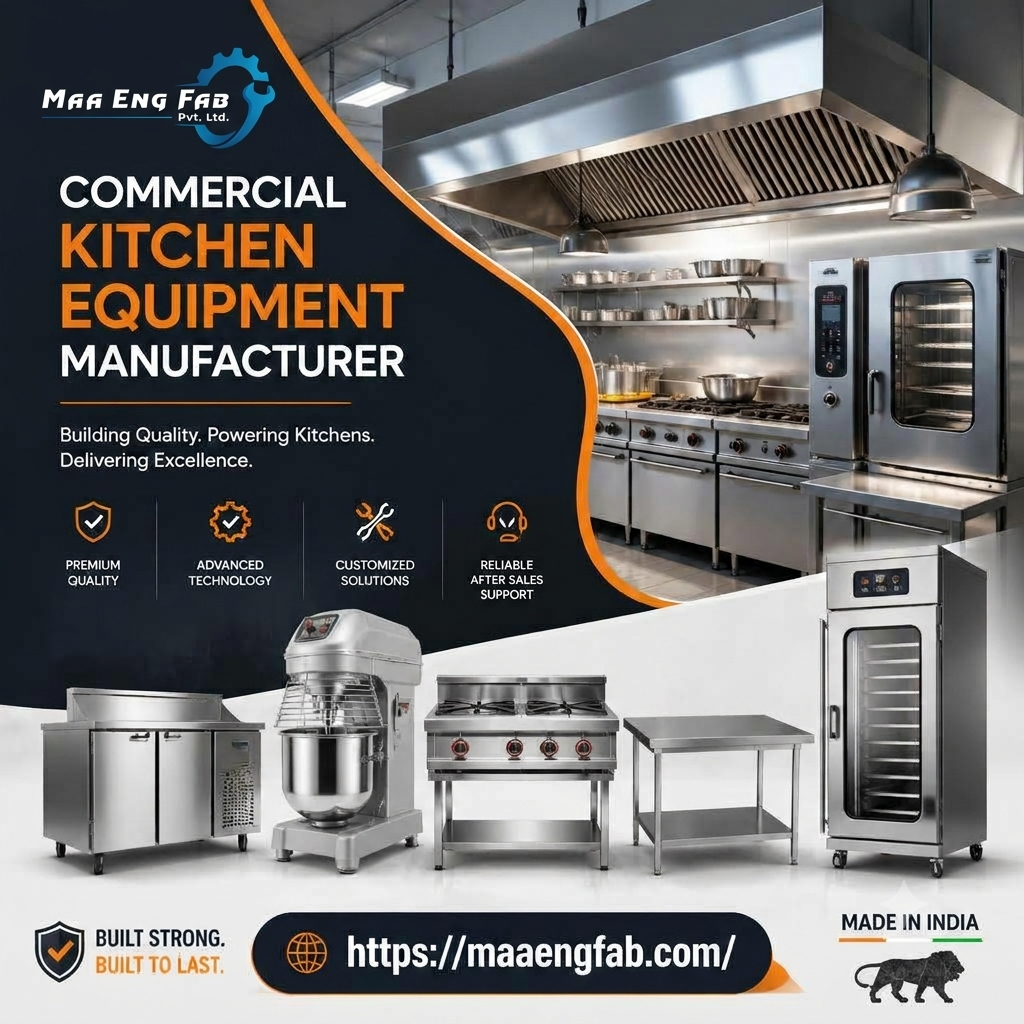
In a commercial kitchen project, equipment specifications are not simply technical details written in a quotation. They influence capacity, utilities, workflow, installation requirements, maintenance, energy use, and the total project budget.
A specification change made during procurement or installation may appear minor, but even a small change in equipment dimensions, capacity, material, power requirement, configuration, or operating method can affect several connected parts of the kitchen.
This is why specification control is an important part of working with Commercial Kitchen Equipment Manufacturers.
A properly controlled specification helps the project team maintain performance, avoid unexpected installation changes, and understand the financial impact before approving modifications.
What Is an Equipment Specification Change?
A specification change occurs when the agreed technical characteristics of equipment are modified after the original design or quotation.
Changes may involve:
-
Equipment dimensions
-
Production capacity
-
Electrical load
-
Gas requirement
-
Water consumption
-
Drainage requirements
-
Temperature range
-
Material grade
-
Equipment configuration
-
Number of compartments
-
Accessories
-
Control systems
-
Automation level
-
Refrigeration capacity
-
Exhaust requirements
-
Mounting arrangement
-
Storage capacity
-
Operating method
Not every specification change creates a major problem. The impact depends on what is being changed, when the change occurs, and how many connected systems are affected.
Why Specification Changes Can Become Expensive
Commercial kitchens operate as interconnected systems.
One equipment specification can influence another part of the project.
For example, increasing the capacity of a cooking appliance may affect:
-
Electrical or gas demand
-
Exhaust requirements
-
Kitchen heat load
-
Equipment spacing
-
Workflow
-
Floor or counter requirements
-
Installation work
-
Operating procedures
-
Maintenance access
Therefore, the purchase price of the replacement equipment is not necessarily the complete cost of the change.
The project team should consider the total impact.
A useful way to think about change cost is:
Total Change Impact = Equipment Cost Difference + Installation Changes + Utility Changes + Labour + Downtime + Future Operating Impact
This provides a more realistic view than comparing two equipment prices alone.
1. Capacity Changes Can Affect Kitchen Output
Capacity is one of the most important specifications in commercial kitchen equipment.
Suppose an appliance originally selected for a particular production volume is replaced with a larger or smaller model.
The change may affect:
-
Batch size
-
Cycle frequency
-
Production time
-
Staff workload
-
Holding requirements
-
Storage requirements
-
Peak-hour output
A larger machine does not automatically mean higher practical productivity.
If upstream preparation cannot supply enough product, the additional capacity may remain unused.
Similarly, selecting equipment with insufficient practical capacity can create repeated production bottlenecks.
This is why capacity should be evaluated against the complete kitchen workflow rather than equipment size alone.
2. Electrical Specification Changes Can Increase Project Requirements
Electrical load is another specification that requires careful control.
Changing equipment may alter:
-
Connected load
-
Voltage requirements
-
Phase requirements
-
Current demand
-
Cable sizing
-
Protection devices
-
Distribution-board capacity
-
Generator requirements
-
Backup power requirements
A replacement appliance with a higher electrical load may require modifications to the electrical infrastructure.
If the change occurs late in the project, additional electrical work can increase both cost and installation time.
Before approving an electrical specification change, the project team should check the total simultaneous load of the kitchen rather than evaluating the appliance separately.
3. Gas Specification Changes Can Affect Utility Planning
Gas-powered equipment also requires coordinated specification control.
Changes can involve:
-
Gas consumption
-
Inlet pressure
-
Burner configuration
-
Connection size
-
Gas line capacity
-
Safety controls
A higher-capacity appliance may require a review of the gas distribution system.
If several appliances operate simultaneously, the available gas supply must support the combined operating requirement.
Therefore, equipment changes should be reviewed against the complete utility design.
4. Water and Drainage Requirements May Change
Water-using equipment can create hidden installation impacts.
A change in equipment may alter:
-
Water inlet requirements
-
Flow rate
-
Operating temperature
-
Drainage volume
-
Drain connection
-
Filtration requirements
-
Water treatment requirements
For example, changing a dishwashing system or food-preparation appliance may affect both water supply and drainage capacity.
If drainage infrastructure has already been installed, modifying equipment later can result in additional plumbing work.
5. Equipment Dimensions Can Affect Kitchen Layout
Physical dimensions are not merely space measurements.
Equipment dimensions affect:
-
Working clearances
-
Door movement
-
Staff movement
-
Loading access
-
Cleaning access
-
Service access
-
Adjacent equipment positioning
-
Counter dimensions
A small increase in equipment depth may reduce the available working aisle.
A change in width may affect the position of nearby appliances.
A change in height may interfere with shelving, ventilation, or overhead services.
Therefore, every dimensional change should be checked against the complete layout before approval.
6. Changes Can Affect Kitchen Workflow
Kitchen workflow depends on the logical movement of people, food, equipment, and waste.
A specification change can alter this flow.
For example, replacing a compact preparation machine with a larger unit may reduce available working space around the preparation area.
This can increase:
-
Walking distance
-
Handling time
-
Cross-traffic
-
Staff congestion
-
Product movement
-
Cleaning difficulty
A technically capable machine may therefore create operational inefficiency if the revised specification is not integrated into the kitchen workflow.
7. Material Specification Changes Can Influence Lifecycle Performance
Material selection is another important part of equipment specification.
Depending on the application, specifications may address:
-
Surface finish
-
Construction material
-
Food-contact surfaces
-
Corrosion resistance
-
Weld quality
-
Insulation
-
Seals and gaskets
-
Hardware
-
Internal components
Changing a material specification may affect initial cost, cleaning requirements, durability, maintenance, and expected service life.
The lowest purchase price should therefore not automatically be treated as the lowest lifecycle cost.
The correct comparison should consider how the material performs in the actual kitchen environment.
8. Refrigeration Specification Changes Can Affect Energy and Storage
Refrigeration equipment is particularly sensitive to specification changes.
Changes in:
-
Storage volume
-
Temperature range
-
Compressor configuration
-
Cooling capacity
-
Door arrangement
-
Insulation
-
Defrost method
can influence both operational performance and energy requirements.
Increasing storage capacity may be useful, but it can also affect floor space, heat rejection, electrical load, and access.
A refrigeration specification should therefore be evaluated against actual storage demand and kitchen operating patterns.
9. Exhaust and Ventilation Changes Should Be Reviewed Carefully
Cooking equipment produces different amounts of heat, steam, smoke, grease, and moisture.
If cooking equipment changes, the ventilation system may also require review.
Possible impacts include:
-
Exhaust volume
-
Hood dimensions
-
Hood position
-
Air balance
-
Ductwork
-
Fan capacity
-
Make-up air
-
Heat management
A specification change that increases cooking intensity without reviewing ventilation can create an uncomfortable and inefficient kitchen environment.
This is why cooking equipment and exhaust planning should be treated as connected systems.
10. Late Changes Usually Create More Project Risk
The timing of a specification change matters.
A change during the initial design stage may be relatively easy to accommodate.
The same change after:
-
Equipment orders
-
Fabrication
-
Electrical installation
-
Plumbing installation
-
Exhaust installation
-
Flooring
-
Counter fabrication
-
Delivery
-
Commissioning
may create significantly more work.
A useful project principle is:
The later a specification changes, the more connected systems should be reviewed before approval.
This does not mean late changes should never be made. It means their full impact should be understood.
11. Specification Changes Can Affect Delivery and Installation
Changing equipment after manufacturing has started can affect:
-
Production schedules
-
Fabrication
-
Shipping
-
Installation sequence
-
Site readiness
-
Storage requirements
-
Commissioning dates
A modified equipment model may have different installation requirements from the originally approved model.
This can create coordination problems if the project team continues working from outdated drawings or specifications.
12. Documentation Must Be Updated After Every Approved Change
One of the most common project-control problems is inconsistent documentation.
For example, the equipment installed on site may differ from the original drawing, while the electrical drawing still shows the old specification.
This creates problems during:
-
Commissioning
-
Maintenance
-
Repairs
-
Audits
-
Future renovation
-
Spare-parts identification
Every approved change should therefore update the relevant documentation.
Important documents may include:
-
Equipment schedule
-
Layout drawings
-
Utility drawings
-
Electrical schedules
-
Plumbing plans
-
Exhaust drawings
-
Equipment datasheets
-
Installation manuals
-
Maintenance records
-
Commissioning documents
13. Change Control Should Include Technical Review
A structured change-control process can prevent many problems.
Before approving a specification change, ask:
Equipment
-
What exactly is changing?
-
Why is the change required?
-
Does the replacement meet the intended application?
-
Is practical capacity affected?
Utilities
-
Does electrical demand change?
-
Does gas demand change?
-
Does water demand change?
-
Does drainage change?
-
Does ventilation change?
Layout
-
Does the equipment footprint change?
-
Are working clearances maintained?
-
Is service access available?
-
Does workflow remain practical?
Cost
-
Is the equipment price changing?
-
Is additional installation work required?
-
Are utility modifications required?
-
Will labour costs increase?
-
Could the change affect project completion?
Operations
-
Will operators require additional training?
-
Does the cleaning procedure change?
-
Does maintenance change?
-
Are new spare parts required?
This creates a more complete decision record.
14. Manufacturers Should Provide Change Impact Information
Professional Commercial Kitchen Equipment Manufacturers can help project teams by clearly documenting the consequences of specification changes.
A useful technical change document should identify:
-
Original specification
-
Revised specification
-
Reason for change
-
Capacity difference
-
Utility difference
-
Dimensional difference
-
Installation impact
-
Performance impact
-
Cost impact
-
Delivery impact
-
Documentation requiring revision
This makes communication between manufacturers, consultants, contractors, and kitchen operators more reliable.
15. Compare Performance, Not Just Purchase Price
When specifications change, comparing purchase prices alone can produce misleading conclusions.
A better comparison considers:
| Factor | Original Specification | Revised Specification |
|---|---|---|
| Capacity | Planned output | Actual expected output |
| Electrical load | Existing requirement | Revised requirement |
| Gas demand | Existing requirement | Revised requirement |
| Water use | Existing requirement | Revised requirement |
| Dimensions | Approved footprint | Revised footprint |
| Installation | Planned work | Additional work |
| Maintenance | Expected requirement | Revised requirement |
| Cleaning | Existing procedure | Revised procedure |
| Delivery | Planned date | Revised date |
| Lifecycle impact | Expected | Revised |
This allows the project team to evaluate the change using both technical and financial information.
16. Consider Total Cost of Ownership
A specification change can alter the long-term cost of operating equipment.
Lifecycle considerations may include:
-
Energy consumption
-
Water consumption
-
Cleaning labour
-
Preventive maintenance
-
Spare parts
-
Service requirements
-
Downtime
-
Expected replacement frequency
-
Operator training
An equipment option with a higher initial purchase cost may have different operating characteristics from a lower-cost alternative.
Therefore, specification decisions should consider the complete ownership period rather than only the purchase invoice.
17. Validate the Revised Equipment Before Final Acceptance
When a major specification change is approved, the revised equipment should be validated after installation.
Testing may include:
-
Startup performance
-
Operating temperature
-
Practical capacity
-
Recovery time
-
Utility consumption
-
Safety functions
-
Workflow compatibility
-
Cleaning access
-
Operator usability
This confirms that the revised specification works within the actual kitchen environment.
18. Avoid Uncontrolled Specification Substitutions
Sometimes equipment is substituted because of availability, delivery schedules, or procurement issues.
Substitution should not be treated as a simple product replacement.
The replacement should be technically compared against the original specification.
Check:
-
Capacity
-
Dimensions
-
Utilities
-
Materials
-
Controls
-
Performance
-
Installation requirements
-
Maintenance
-
Safety
-
Documentation
A product may appear similar but still create significant differences in actual kitchen operation.
19. Build a Specification Freeze Point
Large kitchen projects can benefit from a clearly defined specification freeze point.
After the freeze point, changes should require formal technical review.
This does not prevent necessary changes. Instead, it ensures that every change is documented and evaluated.
A controlled process can include:
Request → Technical Review → Cost Review → Utility Review → Layout Review → Approval → Documentation Update → Installation → Validation
This creates traceability from the original requirement to the final installed equipment.
20. Practical Checklist for Specification Change Management
Before approving a specification change, verify:
-
Capacity reviewed
-
Equipment dimensions checked
-
Electrical requirements checked
-
Gas requirements checked
-
Water requirements checked
-
Drainage reviewed
-
Exhaust requirements reviewed
-
Workflow reviewed
-
Cleaning access checked
-
Maintenance access checked
-
Safety requirements checked
-
Delivery impact reviewed
-
Installation impact reviewed
-
Purchase cost compared
-
Lifecycle cost considered
-
Drawings updated
-
Equipment schedule updated
-
Manufacturer documentation updated
-
Final performance validation planned
How Specification Control Improves Commercial Kitchen Projects
Specification control connects procurement decisions with actual kitchen performance.
When equipment specifications are reviewed systematically, project teams can identify potential impacts before they become expensive site problems.
This approach helps control:
-
Equipment compatibility
-
Utility planning
-
Installation quality
-
Workflow efficiency
-
Production capacity
-
Project cost
-
Maintenance requirements
-
Long-term operational performance
It also creates better communication between kitchen operators, consultants, contractors, suppliers, and Commercial Kitchen Equipment Manufacturers.
Conclusion
Equipment specifications are closely connected to the technical and financial performance of a commercial kitchen. A change in capacity, dimensions, utilities, materials, controls, or configuration can affect more than the equipment itself.
The most reliable approach is to evaluate every significant specification change across the complete project system.
Review the equipment, utilities, layout, workflow, installation, documentation, cost, maintenance, and lifecycle implications before approval. After installation, validate the revised equipment under realistic operating conditions.
When specification changes are controlled through technical review, documented properly, and validated after installation, commercial kitchen projects can reduce avoidable surprises and maintain a closer connection between planned performance and real operational requirements.
 Romaian
 English
 Arabic
 French
 Spanish
 Portuguese
 Deutsch
 Turkish
 Dutch
Dutch
 Italiano
 Russian
 Portuguese (Brazil)
 Greek
Greek