English
 Arabic
 French
 Spanish
 Portuguese
 Deutsch
 Turkish
 Dutch
Dutch
 Italiano
 Russian
 Romaian
 Portuguese (Brazil)
 Greek
Greek
Smart Mirrors Market Strengthening Intelligent Retail Display Solutions
Other |
2026-07-28 12:41:24
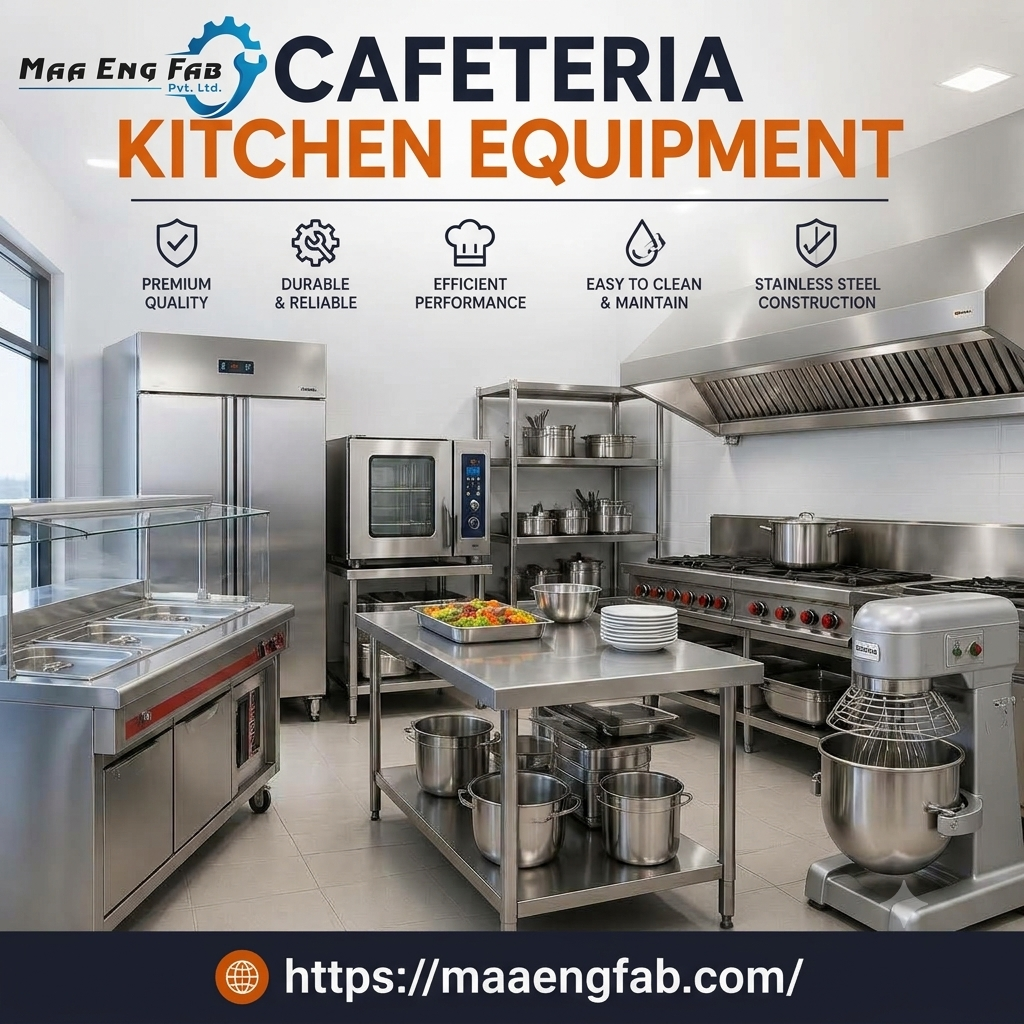
Selecting cafeteria equipment involves more than comparing product names, prices or basic capacity figures. A technical data sheet can reveal important information about how a piece of equipment is designed to operate, what utilities it requires, what limitations may apply and how it should be installed and maintained.
For cafeterias, where several preparation, cooking, holding, refrigeration, washing and serving activities operate as a connected workflow, understanding technical documentation can help buyers make more informed equipment decisions.
Cafeteria Kitchen Equipment Data Sheet Analysis provides a structured approach to reviewing specifications before equipment selection. Instead of relying on a single capacity number, buyers can examine capacity ratings, dimensions, utility requirements, operating limits, testing information, installation conditions and maintenance considerations together.
This approach is particularly relevant when comparing equipment from different Cafeteria Kitchen Equipment Suppliers and planning a complete commercial or institutional food-service operation in India.
A kitchen equipment data sheet is a technical document containing key information about a specific equipment model or category.
Depending on the equipment, it may include:
The exact information varies by equipment type. A cooking appliance, refrigeration unit and washing system will not have identical technical parameters.
Therefore, the objective is not to collect the largest possible specification sheet but to identify the information that is relevant to the intended application.
A capacity figure by itself does not explain whether equipment is suitable for a particular cafeteria.
For example, two machines may both be described as high-capacity equipment, but their:
may be different.
A data-sheet review allows these differences to be identified before procurement.
It also helps connect equipment specifications with actual kitchen requirements rather than treating specifications as isolated numbers.
Capacity is one of the most commonly reviewed specifications in cafeteria equipment.
However, capacity can be expressed in different ways depending on equipment type.
It may refer to:
These values should be interpreted according to the equipment's intended operation.
Rated capacity should not automatically be treated as guaranteed daily production.
Actual output can be influenced by:
Therefore, buyers should understand how the stated capacity relates to the actual production process.
Cafeterias frequently experience periods when demand is significantly higher than normal.
Equipment selection should therefore consider the relationship between:
Demand → Batch Size → Cycle Time → Available Operating Hours → Required Output
A machine with adequate nominal capacity may still be unsuitable if its cycle time creates delays during peak service periods.
This is why data-sheet analysis should complement broader Cafeteria Kitchen Equipment Capacity Planning.
Link this section naturally to your existing article on Cafeteria Kitchen Equipment Capacity Planning.
Utility requirements are another major part of equipment documentation.
Depending on the equipment, these may include:
The available infrastructure should be compared with the equipment's technical requirements before installation.
Electrical equipment should be assessed according to its stated voltage, phase and power requirements.
When several machines operate simultaneously, the overall kitchen load also needs to be considered.
The equipment specification therefore needs to be viewed within the context of the complete kitchen utility plan.
Gas-operated equipment requires an appropriate gas supply and suitable installation conditions.
The technical documentation should be reviewed for relevant connection and operating requirements before the equipment is positioned.
Equipment that uses water may require specific inlet and drainage arrangements.
Drainage location, connection size and access can affect equipment placement and workflow.
Ignoring these requirements until installation can create avoidable site modifications.
Technical data sheets can also identify operating limits that should not be overlooked.
Depending on the equipment, these may relate to:
Operating equipment outside its intended conditions may affect performance, reliability or maintenance requirements.
For this reason, buyers should distinguish between rated capability and recommended operating conditions.
Testing information can provide additional context when evaluating equipment.
Depending on the equipment category, documentation may describe testing related to:
The exact tests will depend on the equipment design and applicable requirements.
Buyers should avoid assuming that every equipment category is tested using the same methodology. Instead, testing information should be reviewed according to the specific equipment and application.
A clear technical data sheet can make comparison between suppliers more structured.
When reviewing Cafeteria Kitchen Equipment Suppliers, buyers can compare equivalent technical parameters rather than relying only on marketing descriptions.
Useful comparison fields can include:
| Parameter | What to Review |
|---|---|
| Dimensions | Footprint and installation space |
| Capacity | Batch, holding or production capacity |
| Power | Electrical load and connection |
| Gas | Supply and connection requirements |
| Water | Inlet requirements |
| Drainage | Outlet and drainage conditions |
| Temperature | Operating range or set point |
| Cycle | Production or operating cycle |
| Installation | Site preparation requirements |
| Testing | Relevant functional or safety checks |
| Maintenance | Service and access requirements |
This approach can make supplier discussions more precise.
A common procurement problem occurs when different suppliers describe similar equipment using different measurement methods.
For example, one supplier may emphasize maximum batch size while another focuses on storage volume or hourly throughput.
Comparisons become more meaningful when the same parameter definitions are used.
A structured comparison should therefore establish:
This reduces the risk of comparing technically different values as though they were equivalent.
Physical dimensions should be considered alongside operational clearances.
A data sheet may provide the external dimensions of equipment, but installation planning may also require space for:
Therefore, the equipment footprint should not be treated as the complete space requirement.
This becomes particularly important in compact cafeteria kitchens where several workstations share limited floor area.
Some equipment depends on supporting systems or other equipment.
Examples include:
Cooking Equipment → Exhaust System
Washing Equipment → Water + Drainage
Refrigeration → Electrical Supply + Airflow Clearance
Preparation Equipment → Electrical Supply + Workstation Space
Data-sheet analysis can help identify these dependencies before installation.
This supports the broader concept of equipment compatibility and helps planners understand how individual specifications affect the complete kitchen system.
Maintenance requirements are another important part of equipment selection.
Useful information can include:
Equipment that is difficult to access for maintenance may create practical challenges even when its operating specifications are suitable.
Technical documentation should therefore be reviewed not only for installation but also for long-term operation.
Connect this section with your existing Cafeteria Kitchen Equipment Lifecycle Planning article.
Technical documentation can also support downtime planning.
When operators and maintenance teams understand equipment requirements, they can identify important operating conditions and service requirements earlier.
Potential problem areas may include:
Data-sheet analysis does not eliminate equipment failure, but it can help reduce avoidable specification and installation-related problems.
Link naturally to your Cafeteria Kitchen Equipment Downtime Analysis article.
Before finalizing equipment, buyers can ask suppliers for clear answers to questions such as:
These questions help move supplier discussions from general product descriptions toward application-specific technical evaluation.
A standardized checklist can make procurement easier.
Using a consistent checklist makes it easier to compare equipment from different Cafeteria Kitchen Equipment Suppliers in India.
A well-structured procurement process can follow five basic stages:
Requirement Definition → Data Sheet Collection → Technical Comparison → Site Compatibility Check → Final Selection
First, define the intended workload and application.
Next, collect technical information from shortlisted equipment.
Then compare equivalent parameters.
After that, verify whether the equipment matches available space, utilities and workflow.
Finally, evaluate the complete technical information before making the procurement decision.
This process can be particularly useful for projects involving multiple equipment categories.
Several mistakes can reduce the value of technical documentation.
Capacity without cycle time, utility requirements and operating conditions may provide an incomplete picture.
Equipment should not be selected before confirming that required utilities can be provided at the installation location.
Different capacity or performance definitions can make direct comparison misleading.
External dimensions alone may not represent the complete working and service space required.
Maximum values may not represent the recommended continuous operating level.
Long-term service requirements should be considered before equipment is installed.
A technical data sheet becomes more useful when it is interpreted in relation to the actual cafeteria operation.
The key questions are not simply:
“What specifications does this equipment have?”
but:
“Do these specifications match the workload, utilities, space, workflow and operating conditions of the intended kitchen?”
This application-based approach can make equipment selection more systematic.
It also provides a common technical language for communication between cafeteria planners, procurement teams, kitchen operators, engineers and Cafeteria Kitchen Equipment Suppliers.
Cafeteria Kitchen Equipment Data Sheet Analysis provides a practical method for evaluating equipment beyond basic product descriptions.
Capacity ratings, utility specifications, operating limits, dimensions, testing information, installation conditions and maintenance requirements can all influence whether equipment is appropriate for a particular cafeteria environment.
For buyers comparing Cafeteria Kitchen Equipment Suppliers in India, standardized technical comparison can make procurement more transparent and application-focused.
The strongest equipment selection process is not based on one specification alone. It considers how the complete set of technical parameters fits the kitchen's workload, infrastructure, workflow and long-term operating requirements.
It may include dimensions, capacity, utility requirements, operating conditions, installation requirements, testing information and maintenance details. The exact parameters depend on the equipment category.
Capacity can refer to different measurements such as batch size, holding volume or production rate. Buyers should understand the definition and operating conditions behind the stated figure.
Electrical, gas, water, drainage and ventilation requirements determine whether equipment can be properly installed and operated within the available infrastructure.
A standardized comparison allows buyers to evaluate equivalent technical parameters across suppliers instead of relying only on product descriptions or price.
Yes. Information about operating limits, maintenance access, cleaning and service requirements can support installation, maintenance and lifecycle planning.