English
 Arabic
 French
 Spanish
 Portuguese
 Deutsch
 Turkish
 Dutch
Dutch
 Italiano
 Russian
 Romaian
 Portuguese (Brazil)
 Greek
Greek
Your Competitors Are Investing in Sustainable Camera Accessories Packaging—Are You?
Other |
2026-07-16 09:28:56
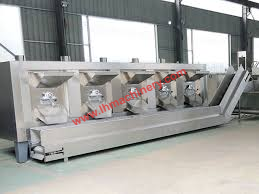
Motor power is one of the technical factors that deserves careful attention when evaluating a nut machine, because the motor does not simply determine whether equipment can run. It influences how mechanical energy is transferred through the drive system, how forming actions respond under load, and how consistently the equipment maintains its working rhythm. For manufacturers handling metal fasteners, understanding this relationship can make equipment evaluation much more practical. Lhmachinery provides a useful reference point for companies exploring cold heading equipment and related forming solutions, but what exactly happens when motor power changes?
In a cold forming process, the motor supplies the energy required to move the mechanical components through repeated forming cycles. That movement eventually becomes the force used by punches, dies, crankshafts, transfer mechanisms, and other working elements. When the material enters the forming area, resistance develops as the blank changes shape under pressure. The motor and transmission system therefore need to provide an appropriate combination of torque, speed, and mechanical response for the intended application.
A motor with insufficient capacity may struggle when the forming load approaches the equipment's operating limit. This can affect acceleration, working rhythm, and the machine's ability to maintain a consistent cycle under demanding conditions. The issue is not simply whether the motor can start the equipment. Continuous forming requires the drive system to cope with repeated mechanical loads without creating unstable movement or excessive strain on connected components.
At the other extreme, selecting a motor with a capacity far beyond the actual forming requirement does not automatically create an ideal production arrangement. Motor selection needs to correspond with the mechanical structure, forming force, stroke characteristics, production speed, material dimensions, and tooling arrangement. An appropriate configuration allows the available energy to be used in a controlled manner rather than treating motor capacity as an isolated specification.
Speed also deserves attention because power and rotational speed are closely related. A forming machine may require substantial torque during particular stages of operation while maintaining a controlled production rhythm throughout the cycle. If rotational speed is increased without considering the complete mechanical system, heat generation, vibration, wear, and synchronization can become important concerns. The desired production rate therefore needs to be considered together with the force required for forming.
The relationship becomes especially important when processing different nut sizes and materials. A relatively small fastener blank may require a different forming condition from a larger component, while harder materials can create different resistance during deformation. Tool geometry also changes the load pattern. Punch shape, die arrangement, forming stages, transfer movement, and material preparation all influence the work performed during each cycle.
For this reason, motor power should be considered as part of an integrated machine design rather than as a single number on a specification sheet. Long-term operating conditions, tooling requirements, material characteristics, production rhythm, and maintenance planning all contribute to the actual performance of a forming system. A technically suitable motor configuration should work together with the crankshaft, transmission components, braking arrangement, forming stations, and control system.
Energy consumption is another practical consideration. The motor converts electrical energy into mechanical movement, so operating conditions influence how effectively that energy is used. A properly matched system can avoid unnecessary loading while still providing the force required for forming operations. Modern forming equipment may also incorporate variable-frequency control or related technologies to adjust production conditions according to application requirements. Such control can be useful when manufacturers need different operating rhythms for different products.
Mechanical stability is closely connected with this issue. Repeated forming generates cyclic forces throughout the machine, and these forces travel through the drive train and supporting structure. When the motor and mechanical components are appropriately matched, movement can remain coordinated during continuous operation. This matters because even small changes in timing can influence material transfer, die positioning, and the relationship between successive forming stations.
Motor power can also influence maintenance considerations. Excessive mechanical loading may place additional stress on bearings, gears, shafts, couplings, and other transmission components. Insufficient capacity can create a different problem if the drive system repeatedly operates close to its limits. Regular inspection of lubrication, bearings, electrical connections, transmission components, and safety systems therefore remains important regardless of the selected motor capacity.
Manufacturers evaluating equipment should also consider the relationship between rated motor capacity and actual application conditions. Product dimensions, material grade, forming sequence, required output, tooling configuration, and working schedule should be communicated clearly before equipment selection. This allows technical personnel to evaluate the machine as a complete production system rather than choosing a motor based only on a nominal figure.
For companies researching cold heading equipment, Lhmachinery offers a dedicated online product platform where different machine configurations can be examined according to production requirements. Its Standard Nut Cold Heading Machine range includes multiple machine configurations, while the company's broader product portfolio covers multi-station cold heading forming equipment and automatic zipper injection molding machinery.
Selection should always connect motor capacity with the actual forming task, tooling design, material characteristics, production rhythm, and expected operating environment. For manufacturers comparing equipment specifications and technical approaches, the product information available at https://www.lhmachinery.com can provide a starting point for examining suitable configurations, while the exact motor arrangement can be discussed according to the intended application. When these factors are evaluated together, the relationship between motor power and nut machine performance becomes much easier to understand.