


The Future of Automotive Wheel Alignment: Precision, Technology, and Safety
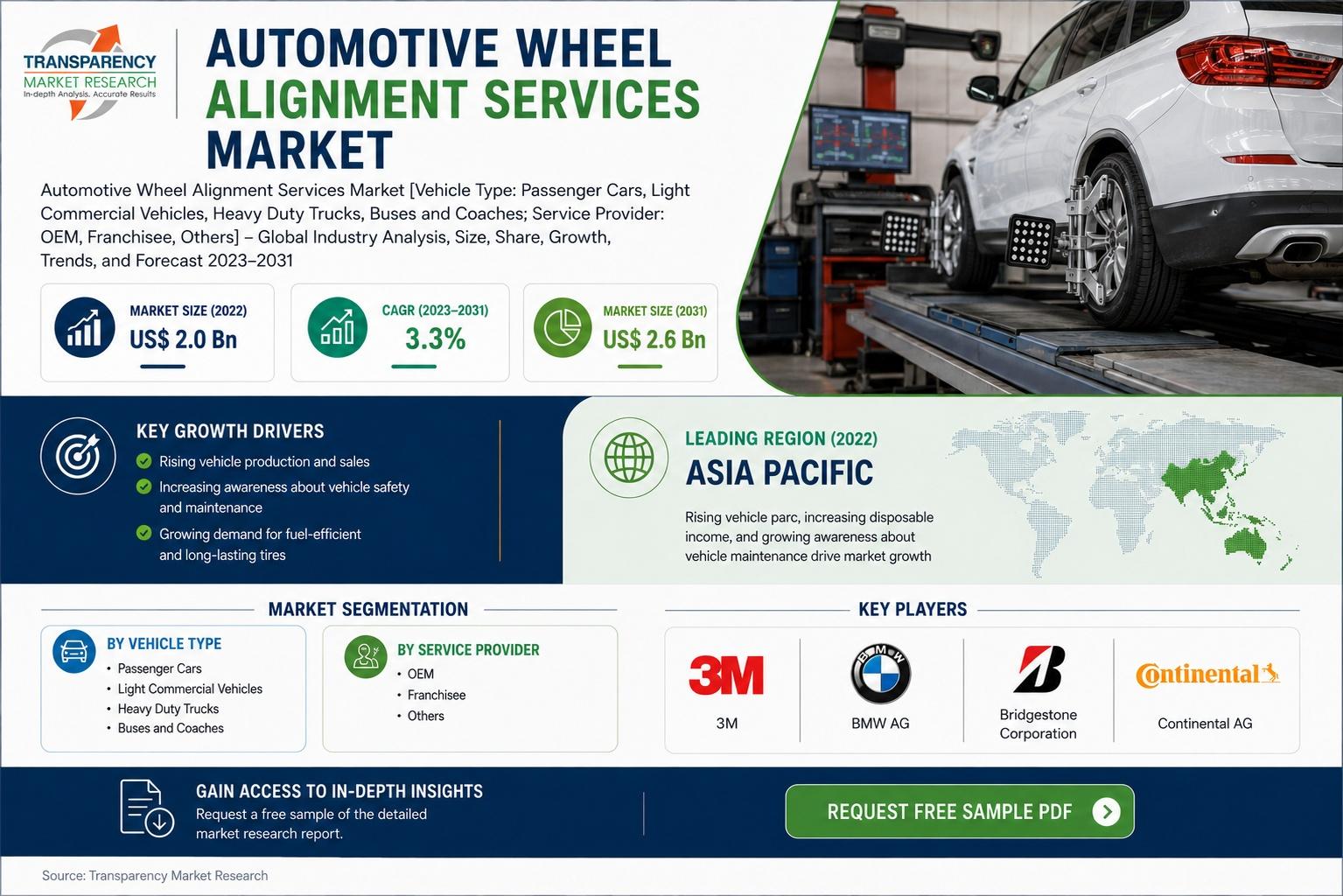
The global automotive wheel alignment services market is witnessing steady growth as vehicle owners increasingly recognize the importance of proper wheel alignment for safety, performance, and fuel efficiency. According to industry estimates, the market was valued at US$ 2.0 billion in 2022 and is projected to reach US$ 2.6 billion by 2031, expanding at a CAGR of 3.3% from 2023 to 2031.
Technological advancements in wheel alignment systems, growing vehicle ownership, and increasing awareness about preventive vehicle maintenance are among the key factors driving market growth. As modern vehicles become more sophisticated, demand for accurate and computerized wheel alignment services is expected to rise significantly across both passenger and commercial vehicle segments.
Understanding Wheel Alignment Services
Wheel alignment is a critical vehicle maintenance procedure that ensures wheels are positioned according to manufacturer specifications. Proper alignment involves adjusting key angles such as camber, caster, and toe to optimize tire contact with the road surface.
Misaligned wheels can lead to uneven tire wear, reduced fuel efficiency, poor handling, and increased safety risks. Regular wheel alignment helps improve driving comfort, extend tire lifespan, enhance vehicle stability, and reduce operating costs.
Modern wheel alignment services use advanced computerized equipment capable of detecting even minor deviations from manufacturer-recommended settings. These technologies provide greater precision and faster diagnostics compared to traditional alignment methods.
Rising Vehicle Sales Fueling Market Growth
One of the major factors contributing to the growth of the automotive wheel alignment services market is the increasing global sales of passenger and commercial vehicles.
Rapid urbanization, infrastructure development, and population growth are driving transportation demand worldwide. Rising disposable incomes and improving living standards are encouraging consumers to purchase personal vehicles, while expanding logistics and e-commerce industries are increasing demand for commercial transportation fleets.
As the number of vehicles on the road continues to grow, the need for regular maintenance and repair services, including wheel alignment, is also increasing. Vehicle owners are becoming more aware that routine alignment checks can prevent costly repairs and improve overall vehicle performance.
This growing vehicle population is expected to create sustained demand for wheel alignment services throughout the forecast period.
Get Sample PDF Copy: https://www.transparencymarketresearch.com/sample/sample.php?flag=S&rep_id=61146
Advancements in Alignment Technology Driving Adoption
Technological innovation has transformed the wheel alignment industry over the past decade. Modern alignment systems now incorporate advanced sensors, cameras, lasers, and computerized diagnostic tools that deliver highly accurate measurements.
Computerized wheel aligners can quickly assess wheel angles and identify alignment issues with minimal human intervention. These systems improve service efficiency, reduce diagnostic errors, and enhance customer satisfaction.
Automotive service providers are increasingly adopting digital alignment technologies to improve service quality and accommodate the growing complexity of modern vehicle designs. As a result, technological advancements continue to play a vital role in expanding the wheel alignment services market.
Growing Focus on Safety and Vehicle Performance
Consumer awareness regarding vehicle safety has increased significantly in recent years. Drivers now better understand the impact that proper wheel alignment has on braking performance, steering response, tire longevity, and fuel consumption.
Automotive manufacturers also emphasize wheel alignment as a critical aspect of preventive maintenance. Proper alignment ensures optimal tire-road contact, which enhances vehicle control and reduces accident risks.
The growing adoption of advanced driver assistance systems (ADAS), electronic stability control (ESC), anti-lock braking systems (ABS), and electric power steering technologies further increases the need for precise wheel alignment. These advanced systems rely on accurate wheel positioning to function effectively and safely.
As safety regulations become more stringent and consumers prioritize vehicle performance, demand for professional wheel alignment services is expected to continue growing.
Passenger Vehicles Lead Market Demand
Based on vehicle type, the passenger vehicle segment dominates the global automotive wheel alignment services market. Rising passenger car production and growing consumer preference for personal mobility are major contributors to this segment's leadership.
The increasing popularity of premium and luxury vehicles has further strengthened demand for specialized maintenance services. Owners of high-end vehicles often seek regular alignment checks to preserve driving comfort, handling characteristics, and tire performance.
Additionally, the growing adoption of electric vehicles is creating new opportunities for wheel alignment service providers. Electric vehicles require precise wheel alignment to maximize energy efficiency and ensure optimal tire wear patterns.
Regional Outlook
Asia Pacific and Europe are expected to remain the most attractive markets for automotive wheel alignment services during the forecast period.
Asia Pacific benefits from strong automotive production, rising vehicle ownership, and expanding middle-class populations in countries such as China and India. Increasing demand for portable and wireless wheel alignment systems is also supporting market growth in the region.
Europe continues to represent a significant market due to the presence of major automotive manufacturers and advanced service infrastructure. Original equipment manufacturers (OEMs) and Tier-1 suppliers invest heavily in vehicle testing facilities, including sophisticated wheel alignment technologies.
The growing adoption of advanced vehicle safety systems and increasing emphasis on preventive maintenance are expected to support demand across both regions.
Competitive Landscape and Future Outlook
The global automotive wheel alignment services market is highly competitive, with major industry participants investing in advanced technologies, customer-focused services, and strategic expansion initiatives.
Leading companies operating in the market include 3M, BMW AG, Bridgestone Corporation, Continental AG, DRiV Incorporated, Ford Motor Company, General Motors, Mahindra & Mahindra Ltd., Mercedes-Benz, MRF, Bosch, TBC Corporation, Goodyear, Toyota Motor Corporation, and Volkswagen AG.
As vehicle technology continues to evolve and consumers place greater emphasis on safety, fuel efficiency, and performance, the demand for professional wheel alignment services is expected to remain strong. Supported by advancements in computerized alignment systems and growing vehicle ownership worldwide, the automotive wheel alignment services market is well-positioned for sustained growth through 2031.
Contact:
Abhishek Budholiya
Transparency Market Research Inc.
State Tower, 90 State Street, Suite 700,
Albany NY – 12207, United States
Tel: +1-518-618-1030
USA – Canada Toll Free: 866-552-3453
Website: https://www.transparencymarketresearch.com
 Dutch
Dutch
 English
 Arabic
 French
 Spanish
 Portuguese
 Deutsch
 Turkish
 Italiano
 Russian
 Romaian
 Portuguese (Brazil)
 Greek
Greek