

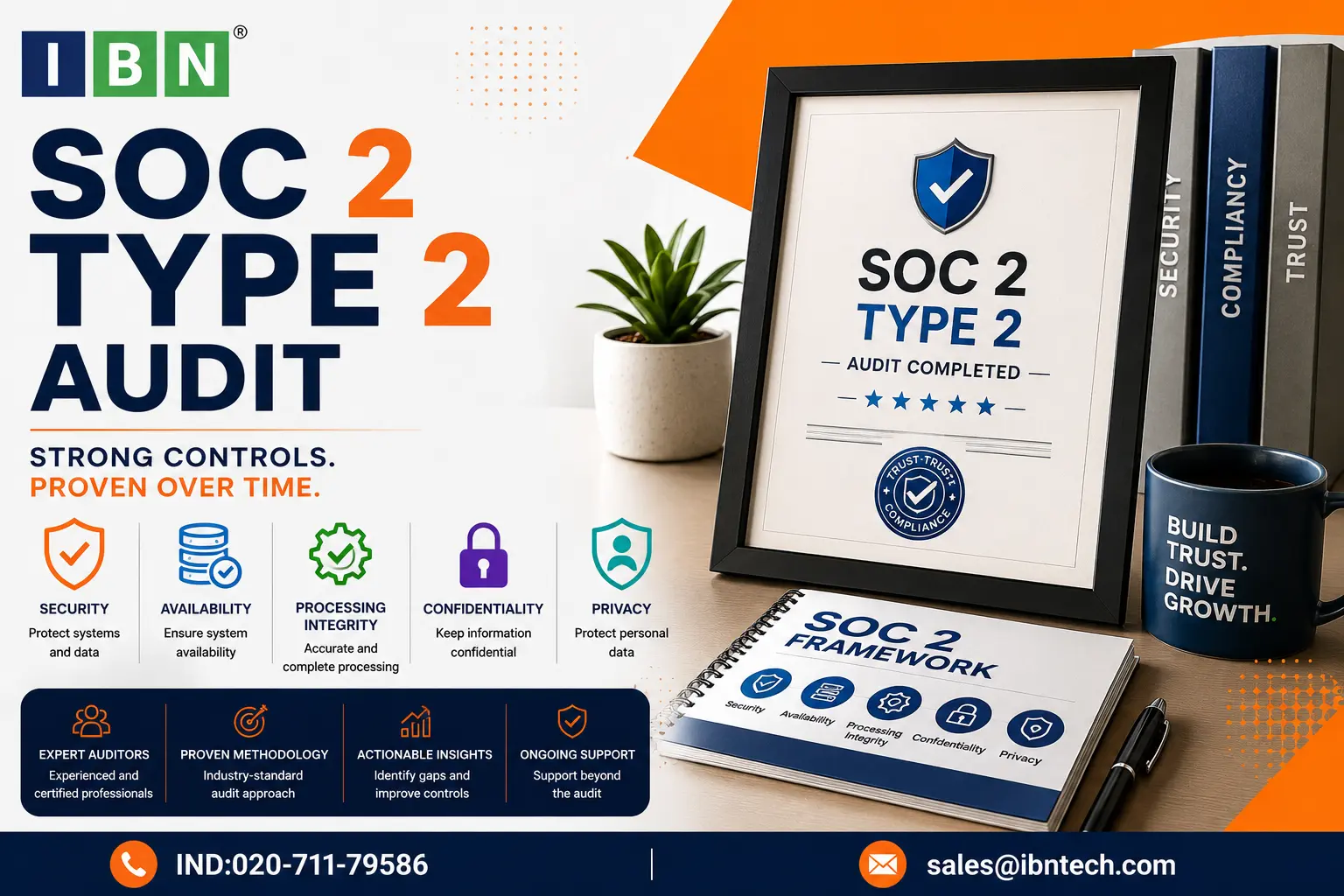
SOC 2 Type 2 Audit for InsurTech & Insurance Software Companies in India
SOC 2 Type 2 Audit for Indian InsurTech Companies: Building a Stronger Control Environment
For Indian InsurTech and insurance software companies, a SOC 2 Type 2 audit can become an important consideration when insurers, brokers, enterprise customers or technology partners want independent assurance over the controls supporting a digital insurance service. Insurance platforms can sit within important workflows such as policy administration, claims management, customer engagement, analytics and business operations, making technology assurance increasingly relevant during enterprise procurement.
For a growing InsurTech SME, preparing for Type II should be approached as an operational exercise rather than a short-term documentation project. The goal is to establish controls that are appropriate to the service, consistently operated and supported by reliable evidence.
Why InsurTech Companies Face Detailed Technology Questions
Insurance technology platforms can support a wide range of functions, including:
- Policy administration
- Claims processing
- Insurance distribution
- Customer portals
- Broker platforms
- Underwriting workflows
- Insurance analytics
- Document management
A platform may also connect with customer systems, cloud infrastructure and external technology providers.
As insurers increasingly rely on technology vendors, they may ask detailed questions about how a provider manages access, software development, incidents, vendors and other aspects of its control environment.
Start With the Service Being Examined
An InsurTech company may operate several products, applications and supporting systems.
One platform might handle claims workflows while another provides analytics or customer engagement capabilities.
Before preparing for SOC 2, management should identify the service intended to be examined and determine which systems, people and processes support it.
This helps create a meaningful scope.
It also reduces the risk of including unrelated systems simply because they belong to the same company.
What Makes Type II Different?
A Type II engagement considers the operating effectiveness of relevant controls over a defined period.
This makes preparation fundamentally different from simply writing policies.
Suppose an organization has an established process for reviewing user access.
For a Type II examination, the organization needs to operate that process during the relevant period and maintain appropriate evidence demonstrating that the required activities were performed.
The same principle applies to other controls included within the examination scope.
Access Management Should Reflect Actual Roles
InsurTech companies can have employees across engineering, customer support, operations, finance, sales and administration.
Each role may have different technology requirements.
The organization should establish appropriate procedures for granting, modifying and removing access.
Privileged access deserves particular attention where employees can administer production applications or infrastructure.
The control design should reflect the company's actual technology architecture rather than relying on an unnecessarily complex framework.
Software Changes Need Appropriate Oversight
Insurance software can evolve rapidly.
Companies may introduce new integrations, customer-facing features, reporting capabilities and workflow improvements.
Where change management is relevant to the SOC 2 scope, the company should have a repeatable process that provides appropriate oversight while allowing development teams to work efficiently.
Existing development, deployment and ticketing platforms can often help document relevant activities.
The process should be realistic enough for teams to follow consistently.
Incident Response Must Work in Practice
A documented incident-response policy is useful, but it should also translate into an operational process.
Employees who may be involved in responding to relevant incidents should understand their responsibilities and escalation paths.
The company should maintain appropriate records when incidents occur.
The objective is not to suggest that incidents will never happen. Rather, the organization should demonstrate that it has an established process for handling events within the scope of its control environment.
Third-Party Providers Can Affect the Service
InsurTech platforms commonly rely on cloud infrastructure, communication tools, analytics platforms and other external technology services.
Management should identify important third parties supporting the examined service.
Appropriate vendor-management processes can help the organization understand those dependencies and respond more effectively when customers ask how external providers are managed.
Use Existing Technology for Evidence
Indian InsurTech SMEs do not necessarily need to build a separate compliance technology environment from scratch.
Existing business systems may already produce useful records.
For example:
- Identity systems can retain access information.
- HR systems can support employee lifecycle records.
- Ticketing platforms can document changes and incidents.
- Development systems can retain software-change information.
- Cloud platforms can provide operational records.
Where appropriate, incorporating evidence generation into normal workflows can make compliance less disruptive.
Understand the Role of the Service Auditor
A company preparing for a SOC type 2 audit should distinguish between readiness assistance and independent examination.
Consultants or internal teams may help identify gaps, improve processes and prepare evidence.
The service auditor performs the independent examination and issues the applicable report.
Management remains responsible for the company's systems, controls and representations.
Understanding these roles early can prevent confusion during the engagement.
SOC II Type 2 Is Not a Universal Compliance Certificate
Companies sometimes use terms such as “SOC II Type 2” and “certification” interchangeably.
However, SOC 2 is an attestation engagement resulting in a report concerning a defined system and applicable Trust Services Criteria.
When discussing soc ii type 2 with customers, InsurTech businesses should be precise about what has actually been examined.
A report should not be presented as evidence that every company operation is independently assured or that all possible regulatory obligations have been satisfied.
Customer Requirements Should Drive the Scope
An InsurTech company should ask what its customers actually need assurance about.
Relevant questions include:
- Which service are customers concerned about?
- Which systems support that service?
- Are customers requesting Type I or Type II?
- Which Trust Services Criteria are relevant?
- What examination period is expected?
- What evidence can the organization already generate?
- Which controls require improvement?
These questions can create a more focused preparation plan.
Don't Build Compliance in Isolation
SOC 2 can involve engineering, IT, HR, security, operations and management.
If one department builds the program without involving the people who actually operate the controls, processes can become difficult to maintain.
Control owners should understand what they are responsible for and why the activity matters.
This is especially important for a growing InsurTech company where responsibilities can change as teams expand.
Keep the Control Environment Aligned With Growth
An insurance software company may add customers, integrations, employees and products after its initial SOC 2 engagement.
Those changes can affect the systems and processes supporting the service.
Management should periodically review its control environment to ensure that documentation and procedures continue to reflect actual operations.
This helps prevent compliance processes from becoming outdated.
The Business Perspective
For Indian InsurTech companies, a SOC 2 Type 2 audit can support enterprise customer assurance while encouraging greater discipline around technology operations.
The strongest preparation begins with a clearly defined service, practical controls and clear ownership.
When access management, change processes, incident response, vendor oversight and evidence collection are integrated into everyday operations, SOC 2 becomes more sustainable—and far more useful to an InsurTech business seeking to build long-term relationships with demanding enterprise customers.

 English
 French
 Spanish
 Portuguese
 Deutsch
 Turkish
 Dutch
Dutch
 Italiano
 Russian
 Romaian
 Portuguese (Brazil)
 Greek
Greek