


The global mens formal footwear market is witnessing steady growth as consumer preferences evolve alongside changes in workplace culture, fashion trends, and rising disposable incomes. Formal footwear remains an essential component of men's wardrobes, particularly for professional settings, corporate environments, formal occasions, and ceremonial events. As consumers increasingly seek products that combine elegance, durability, and comfort, manufacturers are investing in innovative materials, ergonomic designs, and sustainable production practices to maintain competitiveness.
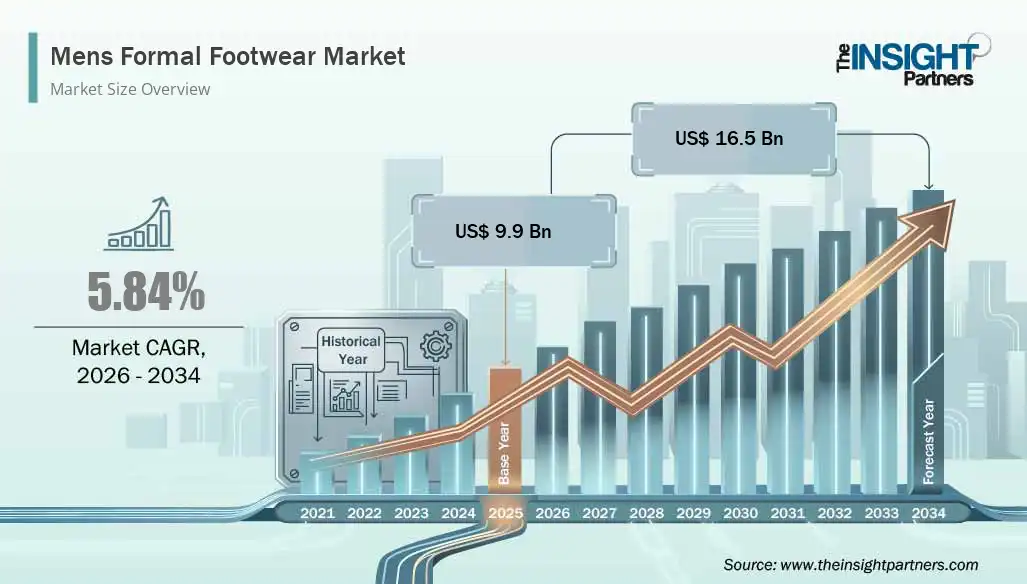
According to The Insight Partners, The Mens Formal Footwear market was valued at US$ 9.9 billion in 2025 and is expected to reach US$ 16.5 billion by 2034; it is estimated to record a CAGR of 5.84% during 2026-2034.
Market Overview
The Mens formal footwear includes a broad range of shoes such as Oxfords, Derbies, Loafers, Monk Straps, Brogues, and dress boots designed for business and formal occasions. Traditionally associated with office environments and formal events, formal footwear has evolved significantly in recent years to incorporate comfort technologies and modern aesthetics.
Key Market Drivers
- Growing Professional Workforce:-One of the primary drivers of the mens formal footwear market is the expanding global workforce. Increased employment in sectors such as finance, consulting, legal services, banking, hospitality, and corporate enterprises creates consistent demand for formal footwear.
- Rising Disposable Incomes:-Growing disposable incomes in developing economies are allowing consumers to allocate more spending toward premium apparel and footwear. Consumers are increasingly willing to invest in high-quality formal shoes that offer both comfort and long-term durability.
- Fashion Awareness and Personal Grooming Trends:-Social media, celebrity endorsements, and digital fashion influencers have significantly impacted consumer purchasing behavior. Men are becoming increasingly conscious of personal appearance and style, resulting in greater demand for sophisticated footwear options.
- Expansion of E-Commerce Platforms:-Online retail has transformed the footwear industry by offering consumers greater product variety, convenience, and pricing transparency. Leading brands now provide virtual fitting tools, detailed product specifications, and customer reviews to improve purchase confidence.
Emerging Market Trends
- Comfort-Focused Formal Footwear:-Modern consumers increasingly seek formal footwear that combines elegance with all-day comfort. Manufacturers are incorporating cushioned insoles, memory foam technology, lightweight materials, and ergonomic arch support into their products.
- Sustainability and Eco-Friendly Materials:-Environmental consciousness continues to influence purchasing decisions worldwide. Many footwear companies are investing in sustainable materials, recycled components, and environmentally responsible manufacturing methods.
- Premiumization Strategy:-Consumers increasingly prefer premium footwear products that offer superior craftsmanship and longer product lifecycles. Luxury and premium brands are benefiting from strong consumer demand for authentic leather products, handcrafted detailing, and exclusive designs.
Market Challenges
- Competition from Casual Footwear:-One of the primary challenges facing the mens formal footwear market is the rising popularity of casual and athleisure footwear. Many workplaces have adopted more relaxed dress codes, reducing everyday demand for traditional formal shoes.
- Fluctuating Raw Material Costs:-Leather, rubber, adhesives, and synthetic materials represent essential components in footwear manufacturing. Price volatility associated with these raw materials can impact production costs and profit margins.
- Counterfeit Products:-The growing prevalence of counterfeit footwear products presents challenges for premium and luxury brands. Fake products can damage brand reputation while reducing revenue opportunities for legitimate manufacturers.
Regional Analysis
North America
North America remains a significant market for mens formal footwear due to the strong presence of corporate professionals, established retail networks, and high consumer spending power. The United States leads regional demand, supported by a large workforce and growing interest in premium footwear products.
Consumers in the region increasingly prefer footwear that combines sophisticated styling with comfort-enhancing features. Sustainable footwear options are also experiencing rising popularity among environmentally conscious buyers.
Europe
Europe represents a mature and fashion-driven market characterized by high demand for premium and luxury formal footwear. Countries such as Italy, Germany, France, and the United Kingdom have strong traditions in footwear craftsmanship and design.
European consumers place considerable emphasis on quality, durability, and sustainability, encouraging manufacturers to innovate and maintain high production standards.
Asia-Pacific
Asia-Pacific is expected to experience the fastest growth during the forecast period. Rapid urbanization, economic development, expanding middle-class populations, and increased professional employment are driving demand across key markets such as China, India, Japan, and Southeast Asia.
Growing exposure to global fashion trends and rising disposable incomes continue to fuel market expansion throughout the region.
Middle East and Africa
The Middle East and Africa region is witnessing growing demand for premium formal footwear, supported by economic diversification, infrastructure development, and expanding white-collar employment sectors.
Luxury footwear brands are increasingly targeting affluent consumers across Gulf Cooperation Council countries, where premium fashion products maintain strong appeal.
South America
South America offers emerging growth opportunities driven by improving economic conditions, urbanization, and rising consumer spending. Brazil and Argentina remain among the region's key markets for formal footwear products.
Competitive Landscape
- C. and J. Clark International Ltd
- Dolce and Gabbana
- Guccio Gucci S.p.A
- Cole Haan LLC
- Calvin Klein Inc.
- Burberry Group Inc.
- Louis Vuitton
- Prada S.p.A.
- Hugo Boss AG
- Alden Shoe Company
Future Outlook
The future of the mens formal footwear market remains promising despite changing workplace trends and growing competition from casual footwear categories. Increasing professional employment, continued urbanization, and rising global disposable incomes will support market expansion throughout the forecast period.


