


How Equipment Changeover Planning Can Improve Efficiency in Multi-Product Industrial Kitchens
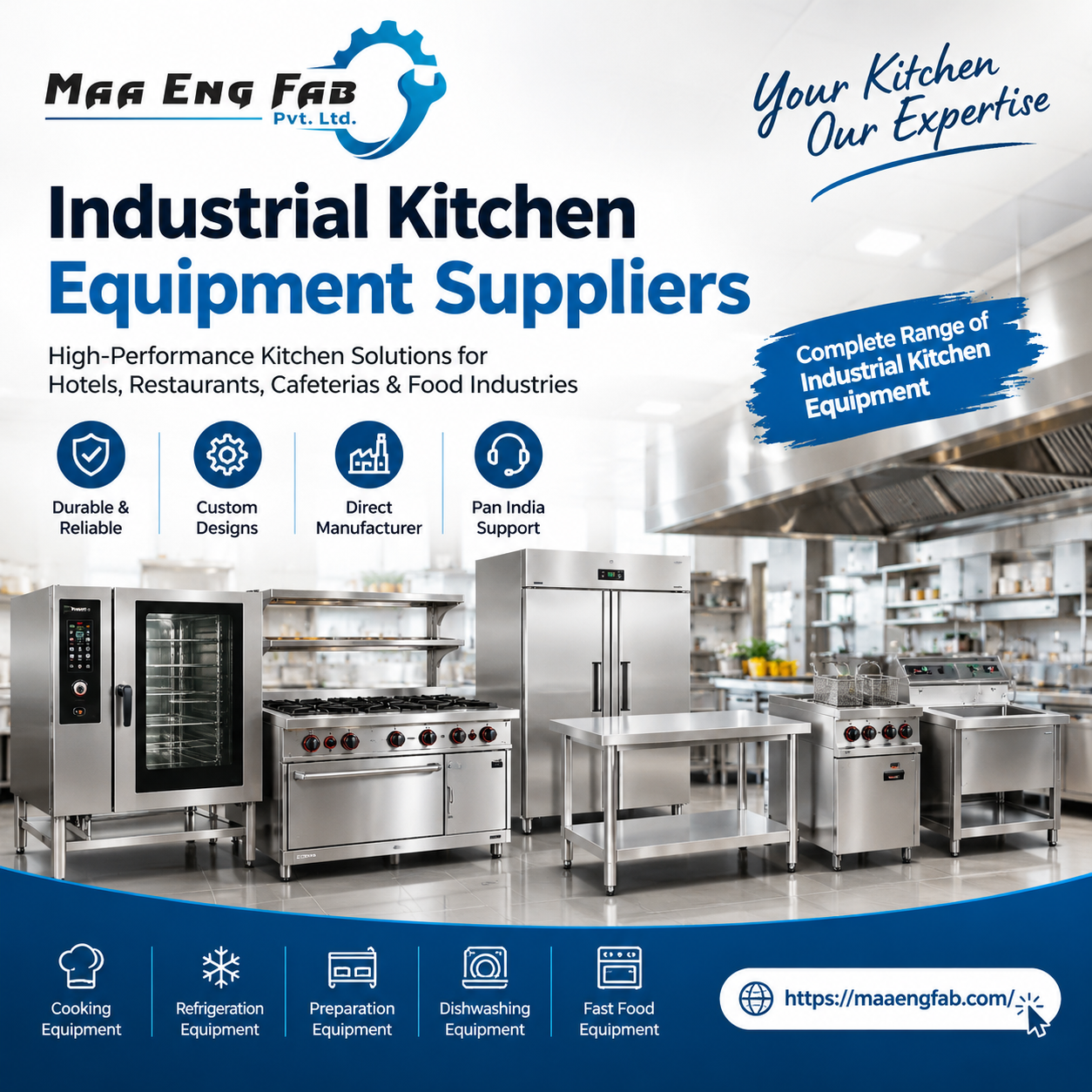
Multi-product industrial kitchens often face a different operational challenge from single-product production facilities. The same preparation, cooking, holding or processing equipment may need to handle different products throughout the day. Every transition between products can require cleaning, inspection, setup, adjustment and material replacement.
If these changeovers are not planned properly, production time can be lost even when the kitchen has sufficient equipment capacity. Employees may wait for equipment to become available, production batches may be delayed, and cleaning activities may interrupt the next scheduled process.
Effective changeover planning helps businesses use Industrial Kitchen Equipment more efficiently while maintaining a controlled and hygienic production workflow.
What Is Equipment Changeover?
Equipment changeover is the process of preparing equipment to move from one product or production batch to another.
Depending on the equipment and product, a changeover may involve:
- Removing the previous product
- Cleaning food-contact surfaces
- Sanitising equipment
- Inspecting the machine
- Replacing tools or attachments
- Adjusting operating settings
- Preparing new ingredients
- Checking the next production requirement
- Restarting and testing the equipment
The actual activities vary between kitchens, but the objective remains the same: prepare equipment for the next production stage without unnecessary delay.
Why Changeover Time Matters in Multi-Product Kitchens
In a high-volume kitchen, several small delays can become a significant loss of productive time.
Consider a production line that changes products several times during a shift. If every transition requires additional cleaning, setup and equipment adjustment, the accumulated time can reduce the number of batches completed during the day.
This means that the effective capacity of Industrial Kitchen Equipment is influenced not only by processing speed but also by how efficiently the equipment can transition between production requirements.
Start With the Production Sequence
One of the simplest ways to reduce unnecessary changeovers is to plan the order in which products are produced.
Instead of changing equipment configuration after every small batch, production planners can group compatible products where practical.
For example, products with similar preparation requirements may be scheduled together before moving to a product that requires a more extensive cleaning or setup process.
Production sequencing should consider:
- Product characteristics
- Cleaning requirements
- Allergen controls
- Processing temperature
- Equipment configuration
- Batch size
- Delivery deadlines
- Peak production periods
The goal is not simply to reduce the number of changeovers. It is to create a sequence that balances production efficiency with food safety and quality requirements.
Identify Which Equipment Creates the Most Changeover Time
Not every piece of equipment creates the same level of transition work.
Some equipment may require only basic cleaning and setup, while other equipment may require dismantling, deep cleaning or configuration changes.
During kitchen planning, businesses should identify equipment that has:
- Long cleaning cycles
- Multiple removable components
- Frequent product contact
- Complex operating adjustments
- High production demand
- Shared use between multiple products
These machines deserve particular attention because they can become changeover bottlenecks.
Separate Cleaning Requirements From Setup Activities
Cleaning and setup should be considered as separate parts of the changeover process.
Cleaning removes residues and prepares the equipment for hygienic operation. Setup prepares the equipment for the next product.
Combining both activities into one estimated time can make production planning inaccurate.
A better approach is to document:
- Product removal time
- Cleaning time
- Inspection time
- Reassembly time
- Equipment adjustment
- Trial or verification time
- Next-batch loading
This provides a clearer understanding of the real time required between two production runs.
Consider Hygiene Before Trying to Reduce Changeover Time
Changeover optimisation should never mean reducing necessary cleaning or hygiene procedures.
In multi-product kitchens, different products may have different contamination, allergen or ingredient-control requirements. A faster changeover is useful only when the required food-safety procedures are still completed correctly.
For this reason, changeover planning should define which cleaning and verification steps are mandatory and which activities can be improved through better organisation.
Industrial Kitchen Equipment should be selected and installed in a way that makes required cleaning and inspection practical.
Reduce Unnecessary Equipment Adjustment
Equipment that requires frequent manual adjustment can increase changeover time.
Where appropriate, businesses should evaluate whether equipment settings, attachments, work surfaces or accessories can be organised to simplify transitions between compatible products.
Operators should also have clear procedures for returning equipment to the required configuration.
The objective is to make the transition repeatable rather than dependent on individual operator experience.
Prepare Materials Before the Changeover Starts
Another common source of lost time is waiting for the next batch to become ready.
If the next product's ingredients, containers, utensils or packaging materials are prepared only after the previous batch has finished, equipment may remain idle.
A better workflow is to prepare the next production requirements while the current batch is still running, wherever the process and food-safety controls allow it.
This can include:
- Preparing ingredients
- Arranging containers
- Checking tools
- Preparing labels
- Confirming production quantities
- Verifying equipment settings
When the equipment becomes available, the next process can begin with fewer interruptions.
Minimise Unnecessary Labour Movement
Changeovers often require several employees to move around the production area.
Poor equipment placement can increase the distance staff need to travel for cleaning tools, ingredients, containers or replacement components.
A practical kitchen layout should therefore place frequently used changeover resources within reasonable access of the relevant workstation.
This is another reason equipment layout should be planned together with workflow rather than treating each machine as an independent purchase.
Use Standardised Changeover Procedures
A standardised procedure helps reduce variation between shifts and operators.
A changeover checklist may include:
- Stop previous production
- Remove remaining product
- Complete required cleaning
- Inspect contact surfaces
- Reassemble components
- Install required tools
- Confirm settings
- Prepare next product
- Perform required checks
- Start the next batch
Standardisation makes it easier to identify where time is being lost and whether the process is being performed consistently.
Track Actual Changeover Time
Estimated changeover times are not always accurate.
Businesses should record actual transition times over several production cycles. This data can reveal which equipment or production sequences are creating the greatest delays.
Useful measurements include:
- Average changeover time
- Longest changeover
- Cleaning time
- Setup time
- Waiting time
- Labour involved
- Number of changeovers per shift
Once this information is available, management can focus improvement efforts on the areas with the greatest operational impact.
Consider Changeover During Equipment Selection
Changeover requirements should be discussed before purchasing equipment.
When comparing Industrial Kitchen Equipment Suppliers, buyers should ask:
- How easy is the equipment to clean?
- Which parts require removal?
- How accessible are food-contact surfaces?
- How long does typical setup take?
- Can attachments or accessories be changed efficiently?
- How easy is routine inspection?
- Can the equipment support different product requirements?
The answers can help businesses choose equipment that fits their actual production model.
Look Beyond Purchase Price
The cheapest equipment is not always the most economical option for a multi-product kitchen.
If a machine requires significantly more cleaning, adjustment or labour during every product transition, the additional operating cost can accumulate over time.
Therefore, Industrial Kitchen Equipment Suppliers in India should be evaluated not only on equipment price but also on practical usability, cleaning access, maintenance requirements, service support and suitability for multi-product production.
Plan Changeovers Around Peak Production
Not all changeovers have the same operational impact.
A transition during a low-demand period may have little effect on overall output, while a similar delay immediately before a major dispatch window can create serious scheduling problems.
Production planners should therefore consider when changeovers occur in relation to:
- Customer delivery schedules
- Meal service periods
- Shift changes
- Staff availability
- Equipment utilisation
- Raw material availability
Scheduling major cleaning or configuration changes during suitable production windows can help protect peak output.
Design Equipment Layout Around Changeover Workflow
Equipment layout can either simplify or complicate changeovers.
Cleaning equipment, water points, drainage, storage areas and work surfaces should be positioned to support the required process without forcing employees to cross unrelated production zones.
Adequate operating space is also important for removing components, cleaning surfaces and performing routine inspections.
A well-designed layout can reduce unnecessary movement while making changeover tasks easier to perform consistently.
Build Changeover Planning Into Future Expansion
As product ranges increase, the number of changeovers may also increase.
A kitchen that currently produces a small number of products may later introduce additional recipes, packaging formats or production batches.
When planning Industrial Kitchen Equipment, businesses should consider whether the selected equipment and layout can accommodate future product changes without creating excessive transition time.
Flexible equipment arrangements and adequate supporting space can make future expansion easier.
Final Thoughts
Equipment changeover is an important but often overlooked part of multi-product industrial kitchen planning. Production capacity is not determined only by how quickly equipment processes a batch. Cleaning, setup, inspection, adjustment and preparation for the next product can also influence the amount of usable production time available each day.
A well-planned changeover system combines practical equipment selection, logical production sequencing, hygienic cleaning procedures, organised labour movement and accurate time tracking.
Businesses evaluating Industrial Kitchen Equipment should therefore consider changeover requirements before finalising equipment and layout decisions. Working with experienced Industrial Kitchen Equipment Manufacturers and Suppliers can help ensure that equipment is suitable not only for production capacity but also for the way products actually move through the kitchen.
When changeovers are planned as part of the complete production workflow, kitchens can reduce avoidable waiting time, improve equipment utilisation and maintain a more consistent production schedule across multiple products.
 English
 Arabic
 French
 Spanish
 Portuguese
 Deutsch
 Turkish
 Dutch
Dutch
 Italiano
 Russian
 Romaian
 Portuguese (Brazil)
 Greek
Greek