English
 Arabic
 French
 Spanish
 Portuguese
 Deutsch
 Turkish
 Dutch
Dutch
 Italiano
 Russian
 Romaian
 Portuguese (Brazil)
 Greek
Greek
Digital Health Coaching Market: AI-Powered Personalized Care Drives the Next Wave of Digital Wellness
Home |
2026-08-19 18:11:10
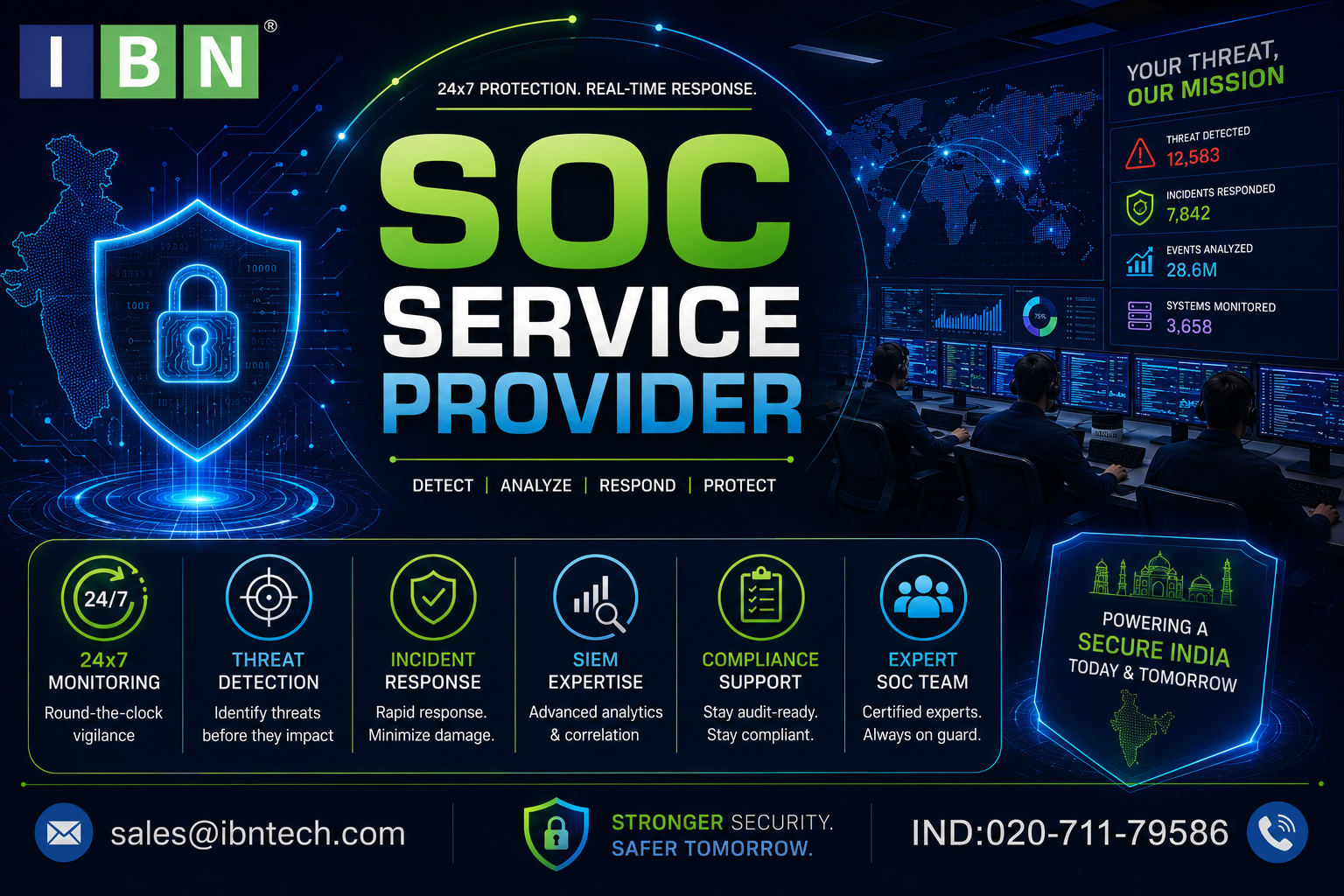
What BFSI Leaders Should Expect From a SOC Service Provider
Banking and financial services organisations operate in an environment where digital access, sensitive information, payment systems, customer accounts, and business applications must remain available and protected. Security teams therefore have to look beyond individual security products and establish a coordinated way to identify, investigate, and respond to suspicious activity.
A soc service provider can support that operating model by providing security monitoring, event analysis, threat detection, incident investigation, and response capabilities.
For Indian BFSI organisations, the question is not simply whether security tools are deployed. The more important operational question is whether security events across a complex environment can be identified, understood, prioritised, and acted upon consistently.
SOC Service Provider Support for High-Value BFSI Environments
A Security Operations Center provides an organised function for monitoring security activity and responding to potential threats. In a BFSI environment, that activity can span users, endpoints, networks, applications, servers, cloud environments, and other technology assets.
A SOC service provider can bring these signals together and support continuous monitoring and security analysis.
This matters because financial organisations often operate multiple technology layers simultaneously. A suspicious authentication event, unusual network behaviour, or unexpected activity on an endpoint may not provide enough context when examined independently.
Centralised security monitoring can help connect relevant events and provide analysts with a broader view of what is happening.
The purpose is not to treat every event as an incident. It is to identify activity that warrants investigation and establish a repeatable process for escalation and response.
Why Managed SOC Services Matter When Security Cannot Stop
Managed SOC services provide outsourced security operations in which an external team supports activities such as continuous monitoring, threat detection, investigation, and incident response according to the agreed service scope.
For BFSI organisations, the operational value lies in extending security coverage without requiring every monitoring responsibility to remain with an internal team.
Financial services environments can generate a large amount of security information. Internal teams may also have to manage infrastructure, applications, access, business systems, audits, and other technology responsibilities.
A managed model can separate continuous security monitoring from some of those competing operational duties.
IBN Technologies describes its managed SOC offering around continuous monitoring, threat detection, incident response, threat intelligence, reporting, and compliance-oriented monitoring. Its published material also describes fully managed, co-managed, and hybrid engagement approaches.
The appropriate model depends on an organisation's existing security capabilities and operational requirements.
The Security Visibility Problem in Financial Organisations
BFSI security teams rarely deal with one isolated technology environment.
A financial organisation can have customer-facing applications, internal systems, employee endpoints, network infrastructure, cloud resources, security tools, and identity systems operating together.
Each component can produce security events.
If these events are examined separately, an important relationship may be missed. An unusual login may appear routine until it is associated with activity from another system. Likewise, a suspicious endpoint event may become more significant when related network activity is considered.
This is one reason SIEM technology is commonly used within SOC operations.
SIEM platforms can collect and correlate security events from multiple sources. The SOC then provides the operational process for reviewing relevant activity, investigating potential threats, and coordinating responses.
The combination is more useful than treating log collection and security monitoring as separate activities.
What a BFSI Organisation Should Look for in a SOC Provider
Selecting a provider requires more than checking whether it offers 24/7 monitoring.
The first consideration should be visibility. The organisation should determine which relevant systems can be connected to the monitoring environment and what information can be collected from them.
The second is detection and analysis. A provider should have a defined approach for identifying suspicious behaviour and assessing whether an alert requires investigation.
The third is incident handling. BFSI organisations should understand how incidents are classified, escalated, communicated, and documented.
The fourth is reporting. Security reports should provide useful information to both technical teams and decision-makers. A report that simply lists alerts may not provide sufficient operational insight.
Another important consideration is integration with existing security operations. An external SOC should fit into the organisation's established responsibilities rather than create uncertainty about who acts when an incident occurs.
Finally, the provider's approach to data, access, confidentiality, and service responsibilities should be clearly understood before implementation.
Why Alert Volume Is Not the Same as Security Visibility
A financial organisation may receive numerous security alerts every day.
More alerts do not necessarily mean better security.
If security teams cannot distinguish routine activity from meaningful indicators of compromise, the volume itself can become an operational problem.
Effective SOC operations focus on analysis and prioritisation.
Security events need context. Analysts may need to examine the source of an event, affected systems, associated activity, and available intelligence before determining its significance.
This process helps turn raw security information into something that security teams can act upon.
For BFSI organisations, that distinction is particularly important because security incidents can affect systems and information that are central to customer trust and business continuity.
Incident Response Should Be Designed Before an Incident
One of the most important aspects of SOC operations is having a defined response process before a security incident occurs.
When suspicious activity is detected, teams need to know what happens next.
The process may include alert validation, investigation, severity assessment, escalation, containment, remediation, documentation, and post-incident review, depending on the nature of the incident and the responsibilities defined in the service arrangement.
A provider and BFSI organisation should establish these responsibilities in advance.
For example, the SOC may be responsible for monitoring and investigation while certain remediation actions remain with the customer's internal IT or security team. Alternatively, the engagement may include broader response support.
There is no single operating model for every organisation.
What matters is that responsibilities are documented, communication paths are clear, and escalation does not depend on decisions being made for the first time during an active incident.
A BFSI-Focused Approach to Security Monitoring
Financial organisations should identify the technology assets and security events that matter most to their business.
That means starting with the environment rather than starting with a generic list of monitoring features.
A useful assessment can consider:
This approach helps organisations define the actual monitoring requirement before selecting a provider.
Where SIEM Fits Into a Managed SOC
SIEM and SOC should not be treated as interchangeable terms.
A SIEM is a technology platform used to collect, centralise, and analyse security information. A SOC is the broader security operation involving people, processes, technology, monitoring, investigation, and response.
For BFSI organisations, the two can work together.
Security events can be collected from relevant sources and correlated within a SIEM environment. Analysts can then examine significant findings and determine whether further investigation or escalation is necessary.
IBN Technologies states that its managed SIEM capability centralises log collection and analysis across on-premises, cloud, and hybrid environments, supporting security visibility and threat detection.
This distinction is useful when evaluating providers because purchasing a security platform alone does not create a complete security operations function.
Compliance and Security Operations in Indian BFSI
Compliance considerations are an important part of BFSI security planning, but the exact requirements depend on the organisation, service, technology environment, data handled, and applicable regulatory obligations.
Security monitoring can support compliance-related activities by creating operational records, monitoring relevant events, and supporting reporting processes.
However, a SOC should not be presented as a substitute for an organisation's complete compliance programme.
IBN Technologies' published SOC material references compliance-oriented monitoring and reporting and identifies frameworks and requirements including ISO 27001 and India-specific contexts such as CERT-In.
For BFSI organisations, the practical approach is to map monitoring and reporting requirements to the controls and obligations that actually apply to the business.
Questions to Resolve Before Onboarding a SOC Provider
Before moving forward with a provider, BFSI security and technology teams should establish the operating details.
These questions help turn a provider evaluation into an operational discussion rather than a feature comparison.
Building a More Consistent Security Operation
For BFSI organisations, security monitoring is ultimately about maintaining visibility over systems that support critical business activity.
An external SOC can provide additional operational capacity, but its value depends on how well the service connects technology, people, processes, and organisational responsibilities.
A soc service provider can support this model through continuous monitoring, security event analysis, threat detection, incident investigation, escalation, and reporting. The right arrangement will depend on the organisation's technology environment, internal capabilities, risk priorities, and applicable obligations.
For Indian BFSI organisations, the objective should be a security operation that does more than collect alerts. It should create a consistent process for turning security signals into informed investigation, coordinated response, and useful operational visibility throughout the year.
Contact Us:
IND- 02067680404
IBN Technologies Ltd.
E-mail: - sales@ibntech.com